The US military is engaged in a variety of routine forms of extrajudicial execution in Iraq. Consider the tesimony of Marine Pfc. John J. Jodka III at his court-martial on charges of being involved in the killing of an Iraqi civilian in the village of Hamdania. Jodka said the squad agreed to a plan by squad leader Sgt. Lawrence G. Hutchins to kidnap and kill a known insurgent.[1] Assuming the intelligence on the "known" insurgent was correct, this plan constituted extra-judicial execution: Hutchins' squad was acting as Police, Judge, Jury and Executioner.
Imagine if the "known insurgent" would have simply handed himself over to Hutchins' squad. Based on Jodka's testimony, they would likely have taken him out and shot him. It's no different than shooting someone who surrenders, which is very un-American.
But, the "liberal" corporate media doesn't even comment on that. The only "news" is that the "known insurgent" wasn't home, so Hutchins' squad instead dragged 52-year-old Hashim Ibrahim Awad from his home and shot him. Then, they planted a shovel and gun on Awad making it appear that they had come upon somone planting a roadside bomb. One has to wonder, how commonly are extra-judicial exectuion plans like that of Hutchins'?
"Maybe this is an aberration," some might say. Unfortuntately, there is a lot of evidence that extra-judicial executions by US forces in Iraq are common. I provide some readily-available examples below.
Homicides of Detainees in U.S. Custody
The American Civil Liberties Union (ACLU) has obtained autopsy reports for people who died in US Custody. The reports indicate "homicide" as the cause of death for at least 21 people. It's certain that these do not represent all cases of detainee deaths, in part because we know that the US had "ghost detainees," people who were never acknowledged to be in US custody. In addition, it's probable that some of the "natural" deaths, in which the autopsy report cites "no significant trauma," were been biased (cover-ups).
Some might say, "Maybe these people died by accident. You know, maybe the interrogators were a little too rough. That's not really intentional "extra-judicial execution."" This is a fine line; however, the autopsy reports also include "accident" as a manner of death while in US custody.
Maybe death-by-torture, or "accidental death" by excessive force isn't exactly the same as extra-judicial execution. So, lets move on to other well-defined categories of killing Iraqis outside the heat of combat.
"Dead Checks"
Evan Wright of the Village Voice, embeded with US Marines, describes routine extra-judicial executions. He describes one example of his convoy coming up to a bullet-riddled pickup truck off the side of the road with people in it. "As our Humvee stopped behind the truck, a Marine in the vehicle ahead of us leapt out, pointed his rifle into the window of the pickup and sprayed it with gunfire. It was a cold-blooded execution." Maybe the people in the truck were already dead.... maybe not. Maybe the "the few, the proud, the brave" are just putting poor guys out of their misery.
Wright describes passing more bodies, some still smouldering, some dismembered. "The execution of one or two more men wasn't worth commenting on." Suggesting that this sort or thing is routine?
After returning home Wright was watching TV. Like many, he saw the video report by "NBC correspondent Kevin Sites, embedded with U.S. forces in Fallujah. A Marine standing over a wounded, unarmed Arab sprawled on the floor of a mosque executed him with a gunshot to the head." But unlike many watching the TV, Wright knew this was not an isolated case, but rather the norm.
According to Wright, "The behavior of the Marine in the video closely conforms to training that is fairly standard in some units. Marines call executing wounded combatants "dead-checking."
"They teach us to do dead-checking when we're clearing rooms," an enlisted Marine recently returned from Iraq told Wright. "You put two bullets into the guy's chest and one in the brain. But when you enter a room where guys are wounded you might not know if they're alive or dead. So they teach us to dead-check them by pressing them in the eye with your boot, because generally a person, even if he's faking being dead, will flinch if you poke him there. If he moves, you put a bullet in the brain. You do this to keep the momentum going when you're flowing through a building. You don't want a guy popping up behind you and shooting you."
So, is the execution of injured iraqis standard operating procedure for US forces in Iraq? This film of a US Apache helicopter crew executing an injured iraqi is one more example that suggests it is.
Is it practical to execute injured Iraqis? Yes. Is it in keeping with American's sense of morality? That question is up for debate.
Another perspective is provided by journalist Kevin Sites in a letter to the Marine unit in which he was embedded and witnessed the now-famous case of the execution in the mosque.
"Recon by Fire"
Filmmaker Brian Palmer has been embedded with US Marines three times. Maybe his accounts, described below, are an aberration. However, if a practice is common enough to receive a slang name, like "dead checks," then they are probably... common practices.
Brian Palmer was present when the Marines engaged some people in a fire fight. The Marines killed three of the men but several others ran, possibly into a canal choked with reeds. Palmer reports, "So the Marines did something I found startling: it's a tactic called "recon by fire." According to Palmer, quoted in a PBS NOW report, "They aim their weapons into the canal and start shooting. The logic behind recon by fire: it's better to fire a bullet blindly than send a Marine into harm's way."[2]
Palmer continues, "But sometimes, Marine bullets hit innocent Iraqis. Last year, I filed requests for Marine Corps reports on incidents like these that occurred during the 2004-2005 deployment to Iraq." In one, Marines attached to the battalion's parent unit shot and killed a six-year-old boy who they mistook for an enemy. Marines from BLT one-two described other such incidents to me, but the corps did not release reports on them."
"In that "recon by fire," Marines killed one more suspected insurgent in the canal. They detained two other men and a 16-year-old boy," says Palmer.
Some might say, "but the people ran and hid. This shows they're guilty." Even if they were insurgents, and they ran, they should be given the opportunity to surrender. However, running doesn't prove guilt. They have good reason to run. Aside from the humiliation of being pushed around by US forces when detained, Iraqis have grown to fear them. According to the International Red Cross, "Coalition Force Intelligence Officers... estimate between 70% and 90% of persons deprived of their liberty in Iraq had been arrested by mistake." [3] The same report documents that many who are arrested are subjected to harsh treatment during the arrest and in subsequent interrogations (Remember the Reuters reporters detained and sexually abused by US forces?). "Two of the three Reuters staff said they had been forced to insert a finger into their anus and then lick it, and were forced to put shoes in their mouths, particularly humiliating in Arab culture." As noted above, some die in US custody by accident. Iraqis know this. So, innocent Iraqis often run when confronted by US troops.
"Light'em Up"
Another common phrase in the US forces' dictum is to "light up" vehicles, which are often carrying unarmed civilians. I sympathize with anxious soldiers, shocked by the terror of war, when they shoot at an oncoming vehicle that isn't stopping. I also sympathize with frightened civilians, running away in fear when stumbling upon US forces, who get obliterated by high caliber US machine guns. Is this extra-judicial execution? It is when the cars have already passed or are turning to get away.
When Italian journalist Giuliana Sgrena's car was shot up, from behind by the way, it made the news. The vast majority of these incidents occur without any journalists around. Sgt. Ricky Clousing describes another instance. "I was in Mosul on a convoy en route, and we stopped to assist another convoy that had been struck by an IED. I was ordered to pull rear security on the convoy, where I proceeded to go behind the rear Humvee and guard the road.
As I was doing that, I had seen a vehicle turn down our road going approximately 15 miles an hour. I saw directly in the window. It was a young boy, or a young man, I should say, and as soon as he saw U.S. troops, he was terrified, took his hands off the wheel. It was evident that he was scared that U.S. troops were there, weapons drawn. He didn't know what was going on. He was making an effort to brake the vehicle and to turn around immediately, when a soldier in the turret of the Humvee behind me proceeded to open up fire and fired four to five rounds inside of the vehicle."
"I spoke with the leaders afterwards and told them that basically they needed to instruct their soldiers to assess and analyze a situation properly... And when I did, I was really shot down by the superiors, basically that I didn't know how convoy operations worked, and I had never been deployed before [he was military intelligence, not infantry] and I didn’t understand that this happens and that that’s just something that’s a reality of war, and that I apparently didn't know what I was talking about." [4]
Another outspoken source on this is Marine Staff Sgt. Jimmy Massey "Shortly after Massey arrived in Iraq, his unit was ordered to man roadblocks. To stop cars, the Marines would raise their hands. If the drivers kept going, Massey says, “we would just light ’em up. I didn’t find out until later on, after talking to an Iraqi, that when you put your hand up in the air, it means ‘Hello.’” He estimates that his men killed 30-plus civilians in one 48-hour period." Do you think this is the only road block like this in of Iraq?
I acknowledge the rationales associated with "realities of war" and frightened soldiers who over-react or act out in rage. Unltimately, the responsibility for these "accidents" and extra-judicial executions rest on George Bush and his war-of-aggression conspitators. "To initiate a war of aggression.. is the supreme international crime differing only from other war crimes in that it contains within itself the accumulated evil of the whole." -- chief American prosecutor, Robert H. Jackson, Nuremberg.
Strikes on "Suspected" Terrorists: Targeted Assassinations
How often have we heard or read the following? "A U.S. Air Force gunship has conducted a strike against suspected terrorrists..." or "U.S. forces launched a pinpoint missile strike in Yemen, killing a top al-Qaeda operative in his car."
In regard to the later example, in which an unmanned CIA drone aircraft was used, a U.S official said, "the evidence collected so far linking al-Harthi to the attack on the USS Cole was circumstantial and probably would not be decisive in court. "Fortunately, that's no longer an issue."
So much for the American value of "Innocent until proven guilty."
UN Findings of Other Extrajudicial Executions in Iraq
"On September 8, 2005 the UN Assistance Mission for Iraq issued a human rights report, stating that the governing institutions created by the United States in Iraq are engaged in an organized campaign of detention, torture, and extrajudicial execution, directed primarily at Iraqis who practice the Sunni form of Islam." [5]
Web LINK
Sources:
[1] Associated Press, Oct. 27, 2006, Web LINK
Follow-up AP Coverage. November 16, 2006, "The judge wanted to hand down a five-year punishment, but was bound by the terms of the plea deal."
[2] PBS, NOW "HIT OR MISS IN IRAQ" March 31, 2006.
[3] ICRC Leaked Report PDF File of leaked ICRC Report. See: p. 8, paragraph 7.
[4] DemocracyNow interview with Sargent Ricky Clausing, August 11th, 2006 Full Transcript.
[5] Nicolas J. S. Davies, "The Dirty War in Iraq."
Read More June 1, 2004, "They Should Never Have Been in Prison", by Aaron Glantz (IPS)
Other US Extra-judicial Executions Outside of Iraq
On the FBI killing of Filiberto Ojeda Rios in Puerto Rico:
"So, on September 23, 2005, in the town of Hormigueros, Puerto Rico, the FBI murdered a legend, but in the process, stupidly, they created a bigger one."
Web LINK: Rafael Rodriguez Cruz, "Assassination in Puerto Rico: The FBI Murders a Legend" Rafael Rodriguez Cruz is an attorney in Hartford, Connecticut.
October 29, 2006
October 28, 2006
Maliki: America's Man in Iraq
Bush has a problem. The central figure in the PBS documentary, "My Country, My Country," Dr. Riyadh, a Sunni medical doctor, is quoted saying that Iraq had a puppet government. Many Iraqi's surely feel that Maliki's a puppet, or at least is beholden to decisions and actions of the United States, which provides personal security for him. Iraqi's know first hand that Iraq has soverignty in name only.
But wait. The corporate media has reported four recent cases of Maliki making statements that conflict with US policy. For example, the US provides a timetable for Iraq to take over security, and Maliki says he does not agree to a timetable being imposed on Iraq. Now Maliki's dissent has become the news story.
One has to wonder, is Maliki's appearance of dissent being scripted? We know from former Treasury Secretary Paul O'Niel that Bush's Cabinet meetings were often scripted. We know that political handlers are very sensitive to how their story is going to play in the corporate media, in part because the superficial media dictates the rules for story telling.
One could let it go at that, but then I see something "funny" in an AP article. AP writs:
Al-Maliki's anger grew through the week until on Friday, al-Suneid said, the prime minister told Khalilzad: "I am a friend of the United States, but I am not America's man in Iraq." Hassan Senaid is one of the prime minister's closest advisors.
After Saturday's talks, White House spokesman Tony Snow said of al-Maliki: "He's not America's man in Iraq."
It looks like al-Suneid and Tony Snow are reading from the same US talking points.
Sources:
Associated Press, STEVEN R. HURST and QASSIM ABDUL-ZAHRA, Oct. 28, 2006.
Web LINK
But wait. The corporate media has reported four recent cases of Maliki making statements that conflict with US policy. For example, the US provides a timetable for Iraq to take over security, and Maliki says he does not agree to a timetable being imposed on Iraq. Now Maliki's dissent has become the news story.
One has to wonder, is Maliki's appearance of dissent being scripted? We know from former Treasury Secretary Paul O'Niel that Bush's Cabinet meetings were often scripted. We know that political handlers are very sensitive to how their story is going to play in the corporate media, in part because the superficial media dictates the rules for story telling.
One could let it go at that, but then I see something "funny" in an AP article. AP writs:
Al-Maliki's anger grew through the week until on Friday, al-Suneid said, the prime minister told Khalilzad: "I am a friend of the United States, but I am not America's man in Iraq." Hassan Senaid is one of the prime minister's closest advisors.
After Saturday's talks, White House spokesman Tony Snow said of al-Maliki: "He's not America's man in Iraq."
It looks like al-Suneid and Tony Snow are reading from the same US talking points.
Sources:
Associated Press, STEVEN R. HURST and QASSIM ABDUL-ZAHRA, Oct. 28, 2006.
Web LINK
October 24, 2006
Silenced Majority
An October 2006 CNN poll asked, "Do you approve or disapprove of the way George W. Bush is handling the situation in Iraq?" A majority, 64%, answered "Disaprove."
CNN asked, "From what you know now, do you think the United States did the right thing in taking military action against Iraq, or not?" A majority, 54%, answered "Not right thing."
During the Vietnam War, the term "Silent Majority" was used by President Richard Nixon in a 1969 speech. It referes to a hypothetical large number of people who do not express their opinions publicly. When President Nixon used it for the first time, it referred to those Americans who did not join in the large demonstrations against the Vietnam War at the time. (Wikipedia).
Today, according to the polls, the majority of Americans think the Iraq War "was not the right thing." However, because the mass media is controlled by corporate owners and advertizers, this majority is "silenced," hence a new term is being born. It is a sign of the gravity of our times, times that are as or more critical to the future of the World as was the Vietnam era.
CNN asked, "From what you know now, do you think the United States did the right thing in taking military action against Iraq, or not?" A majority, 54%, answered "Not right thing."
During the Vietnam War, the term "Silent Majority" was used by President Richard Nixon in a 1969 speech. It referes to a hypothetical large number of people who do not express their opinions publicly. When President Nixon used it for the first time, it referred to those Americans who did not join in the large demonstrations against the Vietnam War at the time. (Wikipedia).
Today, according to the polls, the majority of Americans think the Iraq War "was not the right thing." However, because the mass media is controlled by corporate owners and advertizers, this majority is "silenced," hence a new term is being born. It is a sign of the gravity of our times, times that are as or more critical to the future of the World as was the Vietnam era.
October 17, 2006
"Kill Bush"
I'm taking a big risk here writing a blog entry with that title. But, note the quotation marks. Actually I didn't say "Kill Bush." I'm just quoting 14 year old Julia Wilson, who recently had a visit from the Secret Service for posting a picture of George Bush with "Kill Bush" scrawled across the top.
Did you know that if you Google "Kill Bush" you'll get 31,600,000 hits? You probably do, since you probably googled "Kill Bush" to find this page. But if not, then you'll be curious to know that there's actually a web URL "www.killbush.net" and that it's in spanish. In addition, the only advertisment that comes up is an eBAY add entitled, you got it, "Kill Bush," claiming that you can buy "anything" on eBay. Now, there's an entry the Secret Service should investigate.
Yes, Michelle Malkin's site comes up #3 as of today if you Google "Kill Bush." OK, and for honesty sake, not all of the 31,600,000 hits are actually about killing George Bush. For example, there's one about "Saddam tried to kill Bush's daddy." And, for you technically correct, if you put quotes around "Kill Bush" to search the exact phrase, the number of entries falls drastically to 265,000. Wow, that's not many. Maybe I WILL get to chat with the Secret Service... naw, probably not.
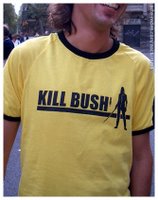 Finally, if you Google the images for "Kill Bush" you'll find 394 images. You'll also discover that there's a "My Space" web page called "Kill Bush."
My Space "Kill Bush" AND, there are people making money off of the "Kill Bush" slogan... well, they were. They no longer seem to be including this nifty T-Shirt in their collection any more. I guess that makes them collector's items on eBAY... just don't get caught wearing one.
Now, maybe you're not that curious, BUT if you search for the exact phrase "Bill Kush," kinda like like "Buck Fush", the number of hits drops to 923 (now 924 because of this blog post). Now THOSE are the ones the SS should be checking out.... well, maybe not.
OK, so I'm not saying "kill Bush," and probably won't get a visit or even an e-mail from the Secret Service, but I'll let you know if I do. My first reaction to the SS visit to Julia Wilson was, "Doesn't the SS have a better system for setting their priorities? What if everyone decided to post e-mails and web page entries with "Kill Bush" statements as a means of protest."
Other thoughts that entered my head were, "Don't SS agents know that the President, every president, represents the plutocratic class? Why would they take a bullet to protect the wealthy elite? We've got well defined chain of authority if the President dies. It's not like the country is going to melt into a quivering heap if Bush is killed... Cheney runs the country anyway."
* Sigh * The other thought I had, and given the off chance the authorities actually read this stuff, is that we really don't want a police state.... really. It isn't becoming to the image of America to descend into a cloak and dagger society.
Nuf said about killing Bush. He's doing a fine job of it himself.
Did you know that if you Google "Kill Bush" you'll get 31,600,000 hits? You probably do, since you probably googled "Kill Bush" to find this page. But if not, then you'll be curious to know that there's actually a web URL "www.killbush.net" and that it's in spanish. In addition, the only advertisment that comes up is an eBAY add entitled, you got it, "Kill Bush," claiming that you can buy "anything" on eBay. Now, there's an entry the Secret Service should investigate.
Yes, Michelle Malkin's site comes up #3 as of today if you Google "Kill Bush." OK, and for honesty sake, not all of the 31,600,000 hits are actually about killing George Bush. For example, there's one about "Saddam tried to kill Bush's daddy." And, for you technically correct, if you put quotes around "Kill Bush" to search the exact phrase, the number of entries falls drastically to 265,000. Wow, that's not many. Maybe I WILL get to chat with the Secret Service... naw, probably not.
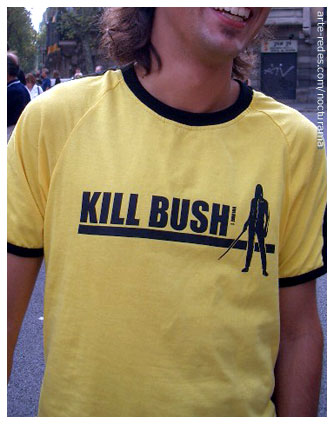 Finally, if you Google the images for "Kill Bush" you'll find 394 images. You'll also discover that there's a "My Space" web page called "Kill Bush."
My Space "Kill Bush" AND, there are people making money off of the "Kill Bush" slogan... well, they were. They no longer seem to be including this nifty T-Shirt in their collection any more. I guess that makes them collector's items on eBAY... just don't get caught wearing one.
Now, maybe you're not that curious, BUT if you search for the exact phrase "Bill Kush," kinda like like "Buck Fush", the number of hits drops to 923 (now 924 because of this blog post). Now THOSE are the ones the SS should be checking out.... well, maybe not.
OK, so I'm not saying "kill Bush," and probably won't get a visit or even an e-mail from the Secret Service, but I'll let you know if I do. My first reaction to the SS visit to Julia Wilson was, "Doesn't the SS have a better system for setting their priorities? What if everyone decided to post e-mails and web page entries with "Kill Bush" statements as a means of protest."
Other thoughts that entered my head were, "Don't SS agents know that the President, every president, represents the plutocratic class? Why would they take a bullet to protect the wealthy elite? We've got well defined chain of authority if the President dies. It's not like the country is going to melt into a quivering heap if Bush is killed... Cheney runs the country anyway."
* Sigh * The other thought I had, and given the off chance the authorities actually read this stuff, is that we really don't want a police state.... really. It isn't becoming to the image of America to descend into a cloak and dagger society.
Nuf said about killing Bush. He's doing a fine job of it himself.
October 15, 2006
Vokey and Cerveny: True Americans
What defines America as "good"? That we are a just nation, so just, that our judicial procedures give the benefit of the doubt to accused enemies. So free, that we allow extremists, like Nazis and Klansmen, to parade in public. The erosion of these principles represents the erosion of what defines America as "good." If we allow this to happen, America will no longer be special among nations; America will no longer have moral authority, only military authority, which engenders compliance due to fear, not due to respect.
Today, we live in an America that cannot claim to be good, because we have allowed this erosion to occur. The "good" of America has been undermined by a segment of people in the elite political and military class. But there is a battle for America's soul among the elite, with contributions by the more common people.
An example of this battle is the courageous stance being taken by Marine Lt. Col. Colby Vokey, who represents a detainee at the U.S. naval base in Guantanamo, and his his paralegal assistant, Marine Sgt. Heather Cerveny, both pictured below.
Colby is on record saying in April 2006, "Some of the rules [of judicial process] are made by the presiding officers themselves, and they can change tomorrow." According to the CBC, "Lt.-Col. Colby Vokey said his client needs extra lawyers on his side, given what he calls the arbitrary nature of the military proceedings at Guantanamo."" [1]
Cerveny, similarly, has mustered the courage to expose Guantanamo guards who bragged to her about routine abuse of detainees. She will surely be harassed, and face retribution, like barriers to her career path [2] (See Note [3] for an example of this).
Colby and Cerveny deserve our support. Let your voice be heard by contacting the US Department of Defense: CONTACT
 Marine Lt. Col. Colby Vokey, who represents a detainee at the U.S. naval base in Guantanamo
 Marine Sgt. Heather Cerveny, paralegal assistant for Vokey
Notes:
[1]. Canadian Broadcast Corp., April 20, 2006. Web LINK
[2]. AP, MIRANDA LEITSINGER, October, 15, 2006. Web LINK
[3]. October 13, 2006 DemocracyNow! Headline: Military Attorney In Hamdan Case Forced to Leave Military
In news on Guantanamo Bay, the Navy attorney, Lt. Cmdr. Charles Swift, who took on the Bush administration in the landmark Hamdan v. Rumsfeld case is effectively being forced to leave the military. Navy Lieutenant Commander Charles Swift represented the Guantanamo prisoner Salim Ahmed Hamdan in the Supreme Court case that rebuked President Bush’s war powers. About two weeks after the Supreme Court ruled in favor of his client, Swift was denied a promotion. Under the Pentagon’s policy of “up or out” Swift must now retire from the military. The National Law Journal recently named Swift one of the top 100 lawyers in America – he was the only military lawyer on the list.
Today, we live in an America that cannot claim to be good, because we have allowed this erosion to occur. The "good" of America has been undermined by a segment of people in the elite political and military class. But there is a battle for America's soul among the elite, with contributions by the more common people.
An example of this battle is the courageous stance being taken by Marine Lt. Col. Colby Vokey, who represents a detainee at the U.S. naval base in Guantanamo, and his his paralegal assistant, Marine Sgt. Heather Cerveny, both pictured below.
Colby is on record saying in April 2006, "Some of the rules [of judicial process] are made by the presiding officers themselves, and they can change tomorrow." According to the CBC, "Lt.-Col. Colby Vokey said his client needs extra lawyers on his side, given what he calls the arbitrary nature of the military proceedings at Guantanamo."" [1]
Cerveny, similarly, has mustered the courage to expose Guantanamo guards who bragged to her about routine abuse of detainees. She will surely be harassed, and face retribution, like barriers to her career path [2] (See Note [3] for an example of this).
Colby and Cerveny deserve our support. Let your voice be heard by contacting the US Department of Defense: CONTACT
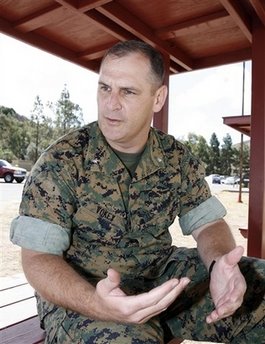 Marine Lt. Col. Colby Vokey, who represents a detainee at the U.S. naval base in Guantanamo
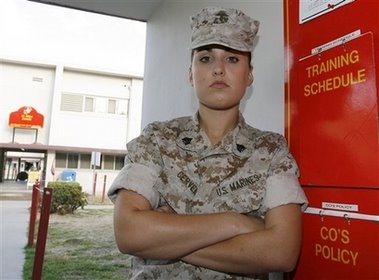 Marine Sgt. Heather Cerveny, paralegal assistant for Vokey
Notes:
[1]. Canadian Broadcast Corp., April 20, 2006. Web LINK
[2]. AP, MIRANDA LEITSINGER, October, 15, 2006. Web LINK
[3]. October 13, 2006 DemocracyNow! Headline: Military Attorney In Hamdan Case Forced to Leave Military
In news on Guantanamo Bay, the Navy attorney, Lt. Cmdr. Charles Swift, who took on the Bush administration in the landmark Hamdan v. Rumsfeld case is effectively being forced to leave the military. Navy Lieutenant Commander Charles Swift represented the Guantanamo prisoner Salim Ahmed Hamdan in the Supreme Court case that rebuked President Bush’s war powers. About two weeks after the Supreme Court ruled in favor of his client, Swift was denied a promotion. Under the Pentagon’s policy of “up or out” Swift must now retire from the military. The National Law Journal recently named Swift one of the top 100 lawyers in America – he was the only military lawyer on the list.
October 7, 2006
Lebanon: Village Damage by District
This page is work in progress...
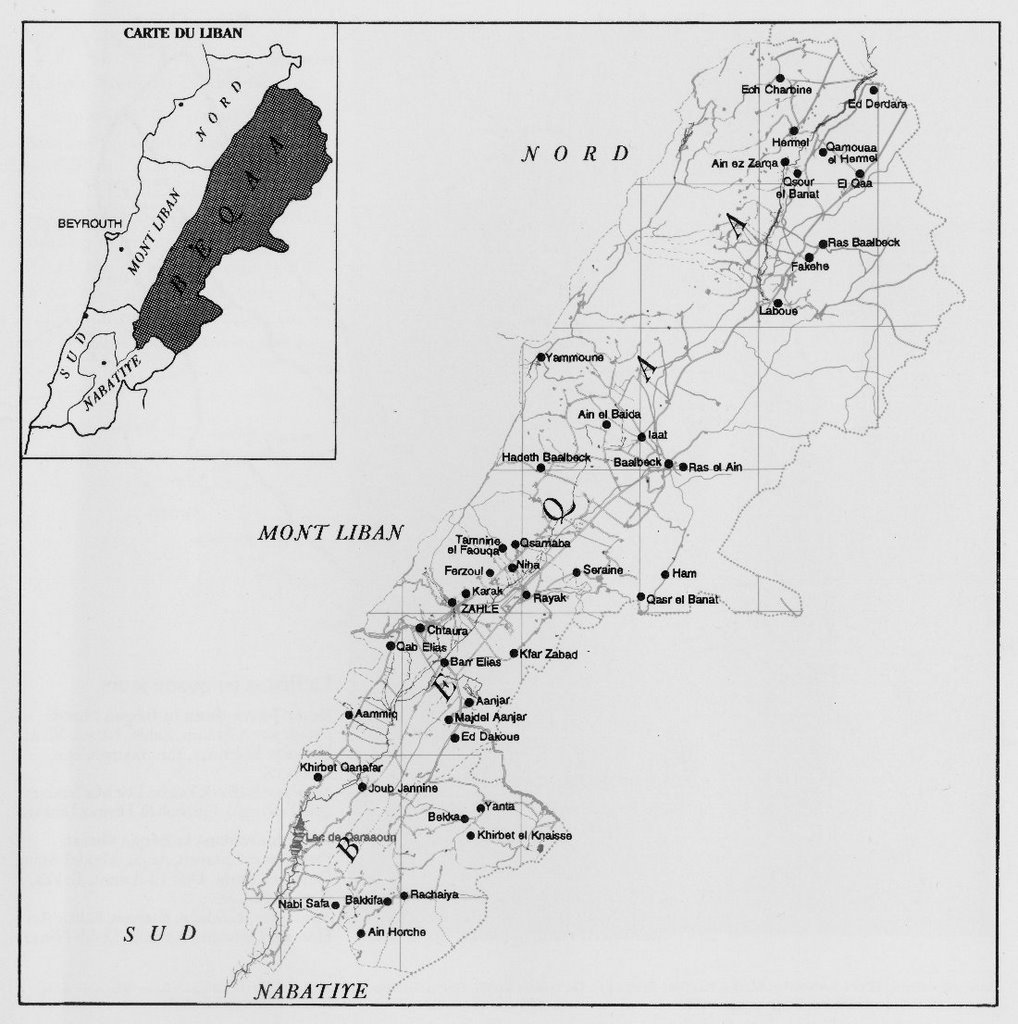
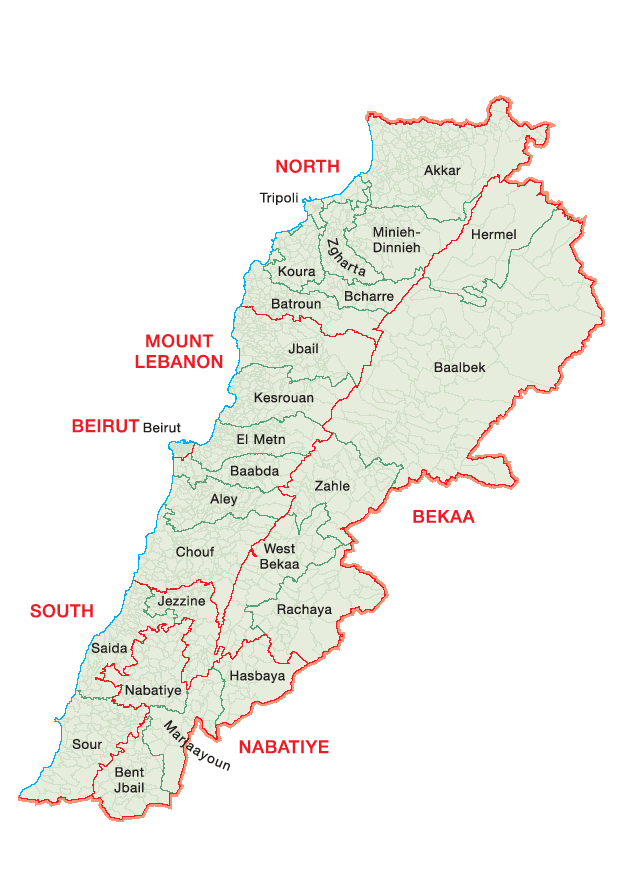
"Lebanon is divided into six governorates, which are further subdivided into 25 districts. The districts themselves are also divided into several municipalities, each enclosing a group of cities or villages." (Wikipedia) All the governorates and their respective districts are listed at the end of the report with a map.
There are about 200 villages south of the Latani River (See Map of Southern Lebanon below, which includes Israeli attacks on UN compounds south of the Latani River).
The following is a summary of damage by governorate, district and village. The primary source is the USAID Lebanon Situation Reports (LSR), which often cite other sources. I've tried to provide report dates and Situation Report numbers.
HOUSING:
Of 120 damaged buildings surveyed that housed 2000 families, 40 need to be reconstructed. About 6,000 housing units were destroyed and 17,000 damaged. (Preliminary report. (LSR32 Sept. 1).
PUBLIC BUILDINGS:
UTILITIES:
Water and sewer piplines in major streets of Haret Hreik Municipality sustained significant damage (LSR38 Sept 12).
Nabatiyeh Governorate (Jabal Amel)
Al-Nabatiyé District
50 percent of all structures were destroyed in the villages of Yohmor and Western Zawtar. (LSR26, Aug. 23).
HOUSING:
Nabatiye Village: 50 percent of the homes destoryed, numerous unexploded ordinance remain.
PUBLIC BUILDINGS:
UTILITIES:
Drinking water sources and waste treatment capacity destroyed south of Nabatiye, Marjayoun including Qaliaiaa (often the collection and distribution pipeline systems are damaged). (LSR32 Sept. 1)
Water remains a concern: Villages of Zaoutar Ghariya, Zaoutar Shargiya and Yahmour. (LSR35 Sept. 6)
* Hasbyya
Marji'youn District
50 percent of all buildings destroyed in Markabe Village. (LSR24)
HOUSING:
Ghanduriyah village: 90 percent of the homes destroyed. (LSR30)
Houla village: 20 percent of the homes destroyed. (LSR20)
Markaba village: 50 percent of the homes destroyed. (LSR20)
Mays al Jabal village: 30 percent of the homes destroyed. (LSR20)
Qantarah (Cantarah): 50 percent of the homes destroyed. (LSR20)
Talusha village: 15 percent of the homes destroyed. (LSR20)
Tayyababh village: 80 percent of the homes destroyed. (LSR20)
PUBLIC BUILDINGS:
UTILITIES:
District affected by damage to three major pumping stations.
Khiam, water and sewer networks destroyed (LSR35 Sept. 6)
Marjaba village: Central water tank and pumps damaged, nonfunctinal.
Markaba and Taibe water needs remained as of Sept 8 (LSR38 Sept. 12)
Taibi, Adaisi, Deir Seryan, Kantara, Kfar Kila, Talousse, Rab Tlateen and Markaba, Mais Al Jabal, Blida and Houla water and waste piplines damaged (LSR32 Sept. 1)
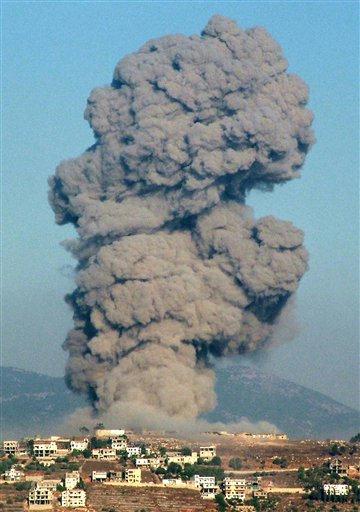
A large plume of smoke billows in the town of Khiam, in southern Lebanon, Tuesday, July 25, 2006, after Israeli air raids targeted it. For as sense of scale, note the size at the base of the plume, compared to the houses in front of the plume. An Israeli bombardment hit a UN observer post in the village of Khiam, killing four UN observers. (AP Photo/Lotfallah Daher).
Bint Jbeil District (Bent Jbail, Bint Jubayl)
HOUSING:
Ayta As Shaab: 70 percent of the homes and other properties were destroyed or badly damaged. (LSR24)
Bayt Leif: 30 percent of the homes destroyed (LSR21)
Bint Jbeil: 800 properties destroyed, 1,100 significantly damaged. (LSR36)
Borj Qalaouiye: 20 houses destroyed, 80 heavily damaged. (LSR38)
Kafra: 25 percent destroyed (LSR21)
Khiam village: 750 homes destroyed, 1,000 homes heavily damaged, 1,000 lightly damaged.
Majdel Silim: 200 homes destroyed, about 350 damaged out of 700. (LSR36)
Qabrikha: 100 homes destroyed, 75 damaged out of 480. (LSR36)
Soultaniye: Significant damage to houses. (LSR38)
PUBLIC BUILDINGS:
50 to 90 percent of the government and public buildings in 39 villages in the Bent Jbail district destroyed. (LSR 26 Aug. 29)
UTILITIES:
Affected by damage to three major pumping stations: Villages of Maroun er Ras, Aainata, Qabrikha and Kounine (LSR36 Sept 7)
Majdel Silim: Need water pumps (LSR36)
Soultaniye: Need for water tanks. (LSR38 Sept 12)
UXO:
Majdel Silim: UXO scattered through the village.
 Al-Hirmil District (Hermel)
Hermel village had the most significant structural damage in Bekaa.
HOUSING:
PUBLIC BUILDINGS:
UTILITIES:
North Bekaa water supply in need of urgent repairs.
Baalbeck District
HOUSING:
Baalbek: 2,000 homes destroyed. (LSR24)
Taibe: Significant damage to houses. (LSR38)
PUBLIC BUILDINGS:
UTILITIES:
North Bekaa: water supply in need of urgent repairs.
Taibe village: Need for water tanks (LSR38 Sept. 12)
* Tyre (Sur, Sour)
HOMES:
Jabal al Butm village: 50 percent of the homes destroyed. (LSR21 Aug. 16)
Zibquin village: 60 percent destroyed. (LSR21 Aug. 16)
PUBLIC BUILDINGS:
UTILITIES:
Lack safe water and reliable power: Villages of Deir Qanoun, Qana, Ramadya, Knisse, Henniyeh, and Zibquin. (LSR35 Sept. 6)
Water and sanitation concerns: Villages of Srifa, Maarake (LSR37 Sept. 8)
Beirut Governorate
The Beirut Governorate is not divided into districts and is limited to the city of Beirut.
Nabatiyeh Governorate (Jabal Amel) - 4 districts
* Al-Nabatiyé
* Hasbyya
* Marji'youn
* Bint Jbeil
Beqaa Governorate - 5 districts
* Al-Hirmil (Hermel)
* Baalbeck
* Zahlé
* Western Beqaa (al-Beqaa al-Gharbi)
* Rashyya
North Governorate (al-Shamal) - 7 districts
* Akar
* Tripoli
* Zgharta
* Bshirri
* Batroun
* Koura
* Miniyeh-Danniyeh
Mount Lebanon Governorate (Jabal Lubnan) - 6 districts
* Jbeil
* Kisirwan
* Al-Matn
* Ba'abda
* Alay
* Al-Shouf
South Governorate (al-Janoub) - 3 districts
* Saida
* Tyre (Sur)
* Jezzine
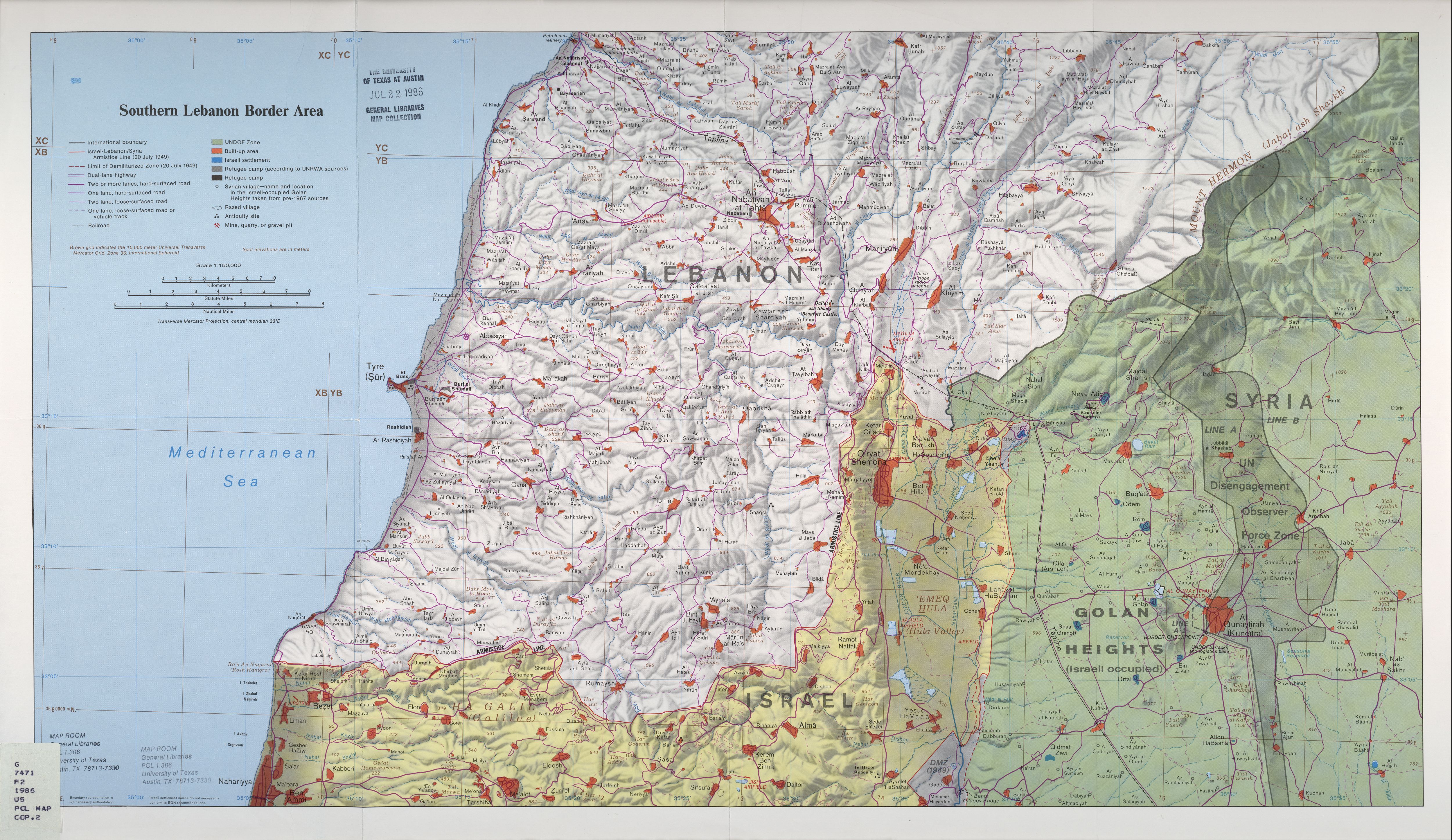
CLICK for Detailed Map of Southern Lebanon boarder area - 1986
Lebanon Village Districts, below


Source: USAID Disaster Assistance daily situation reports, which often cite other sources, like the Lebanese government and the United Nations.
Click for painting, "Lebanon Village 2006"
"Lebanon is divided into six governorates, which are further subdivided into 25 districts. The districts themselves are also divided into several municipalities, each enclosing a group of cities or villages." (Wikipedia) All the governorates and their respective districts are listed at the end of the report with a map.
There are about 200 villages south of the Latani River (See Map of Southern Lebanon below, which includes Israeli attacks on UN compounds south of the Latani River).
The following is a summary of damage by governorate, district and village. The primary source is the USAID Lebanon Situation Reports (LSR), which often cite other sources. I've tried to provide report dates and Situation Report numbers.
Beirut Governorate
(There are no "districts" in Beirut. Only the city and neighorhoods).HOUSING:
Of 120 damaged buildings surveyed that housed 2000 families, 40 need to be reconstructed. About 6,000 housing units were destroyed and 17,000 damaged. (Preliminary report. (LSR32 Sept. 1).
PUBLIC BUILDINGS:
UTILITIES:
Water and sewer piplines in major streets of Haret Hreik Municipality sustained significant damage (LSR38 Sept 12).
Nabatiyeh Governorate (Jabal Amel)
Al-Nabatiyé District50 percent of all structures were destroyed in the villages of Yohmor and Western Zawtar. (LSR26, Aug. 23).
HOUSING:
Nabatiye Village: 50 percent of the homes destoryed, numerous unexploded ordinance remain.
PUBLIC BUILDINGS:
UTILITIES:
Drinking water sources and waste treatment capacity destroyed south of Nabatiye, Marjayoun including Qaliaiaa (often the collection and distribution pipeline systems are damaged). (LSR32 Sept. 1)
Water remains a concern: Villages of Zaoutar Ghariya, Zaoutar Shargiya and Yahmour. (LSR35 Sept. 6)
* Hasbyya
Marji'youn District
50 percent of all buildings destroyed in Markabe Village. (LSR24)
HOUSING:
Ghanduriyah village: 90 percent of the homes destroyed. (LSR30)
Houla village: 20 percent of the homes destroyed. (LSR20)
Markaba village: 50 percent of the homes destroyed. (LSR20)
Mays al Jabal village: 30 percent of the homes destroyed. (LSR20)
Qantarah (Cantarah): 50 percent of the homes destroyed. (LSR20)
Talusha village: 15 percent of the homes destroyed. (LSR20)
Tayyababh village: 80 percent of the homes destroyed. (LSR20)
PUBLIC BUILDINGS:
UTILITIES:
District affected by damage to three major pumping stations.
Khiam, water and sewer networks destroyed (LSR35 Sept. 6)
Marjaba village: Central water tank and pumps damaged, nonfunctinal.
Markaba and Taibe water needs remained as of Sept 8 (LSR38 Sept. 12)
Taibi, Adaisi, Deir Seryan, Kantara, Kfar Kila, Talousse, Rab Tlateen and Markaba, Mais Al Jabal, Blida and Houla water and waste piplines damaged (LSR32 Sept. 1)
A large plume of smoke billows in the town of Khiam, in southern Lebanon, Tuesday, July 25, 2006, after Israeli air raids targeted it. For as sense of scale, note the size at the base of the plume, compared to the houses in front of the plume. An Israeli bombardment hit a UN observer post in the village of Khiam, killing four UN observers. (AP Photo/Lotfallah Daher).
Bint Jbeil District (Bent Jbail, Bint Jubayl)
HOUSING:
Ayta As Shaab: 70 percent of the homes and other properties were destroyed or badly damaged. (LSR24)
Bayt Leif: 30 percent of the homes destroyed (LSR21)
Bint Jbeil: 800 properties destroyed, 1,100 significantly damaged. (LSR36)
Borj Qalaouiye: 20 houses destroyed, 80 heavily damaged. (LSR38)
Kafra: 25 percent destroyed (LSR21)
Khiam village: 750 homes destroyed, 1,000 homes heavily damaged, 1,000 lightly damaged.
Majdel Silim: 200 homes destroyed, about 350 damaged out of 700. (LSR36)
Qabrikha: 100 homes destroyed, 75 damaged out of 480. (LSR36)
Soultaniye: Significant damage to houses. (LSR38)
PUBLIC BUILDINGS:
50 to 90 percent of the government and public buildings in 39 villages in the Bent Jbail district destroyed. (LSR 26 Aug. 29)
UTILITIES:
Affected by damage to three major pumping stations: Villages of Maroun er Ras, Aainata, Qabrikha and Kounine (LSR36 Sept 7)
Majdel Silim: Need water pumps (LSR36)
Soultaniye: Need for water tanks. (LSR38 Sept 12)
UXO:
Majdel Silim: UXO scattered through the village.
Beqaa Governorate (Bekaa)
 Al-Hirmil District (Hermel)
Hermel village had the most significant structural damage in Bekaa.
HOUSING:
PUBLIC BUILDINGS:
UTILITIES:
North Bekaa water supply in need of urgent repairs.
Baalbeck District
HOUSING:
Baalbek: 2,000 homes destroyed. (LSR24)
Taibe: Significant damage to houses. (LSR38)
PUBLIC BUILDINGS:
UTILITIES:
North Bekaa: water supply in need of urgent repairs.
Taibe village: Need for water tanks (LSR38 Sept. 12)
South Governorate
(al-Janoub)* Tyre (Sur, Sour)
HOMES:
Jabal al Butm village: 50 percent of the homes destroyed. (LSR21 Aug. 16)
Zibquin village: 60 percent destroyed. (LSR21 Aug. 16)
PUBLIC BUILDINGS:
UTILITIES:
Lack safe water and reliable power: Villages of Deir Qanoun, Qana, Ramadya, Knisse, Henniyeh, and Zibquin. (LSR35 Sept. 6)
Water and sanitation concerns: Villages of Srifa, Maarake (LSR37 Sept. 8)
Beirut Governorate
The Beirut Governorate is not divided into districts and is limited to the city of Beirut.
Nabatiyeh Governorate (Jabal Amel) - 4 districts
* Al-Nabatiyé
* Hasbyya
* Marji'youn
* Bint Jbeil
Beqaa Governorate - 5 districts
* Al-Hirmil (Hermel)
* Baalbeck
* Zahlé
* Western Beqaa (al-Beqaa al-Gharbi)
* Rashyya
North Governorate (al-Shamal) - 7 districts
* Akar
* Tripoli
* Zgharta
* Bshirri
* Batroun
* Koura
* Miniyeh-Danniyeh
Mount Lebanon Governorate (Jabal Lubnan) - 6 districts
* Jbeil
* Kisirwan
* Al-Matn
* Ba'abda
* Alay
* Al-Shouf
South Governorate (al-Janoub) - 3 districts
* Saida
* Tyre (Sur)
* Jezzine
CLICK for Detailed Map of Southern Lebanon boarder area - 1986
Lebanon Village Districts, below
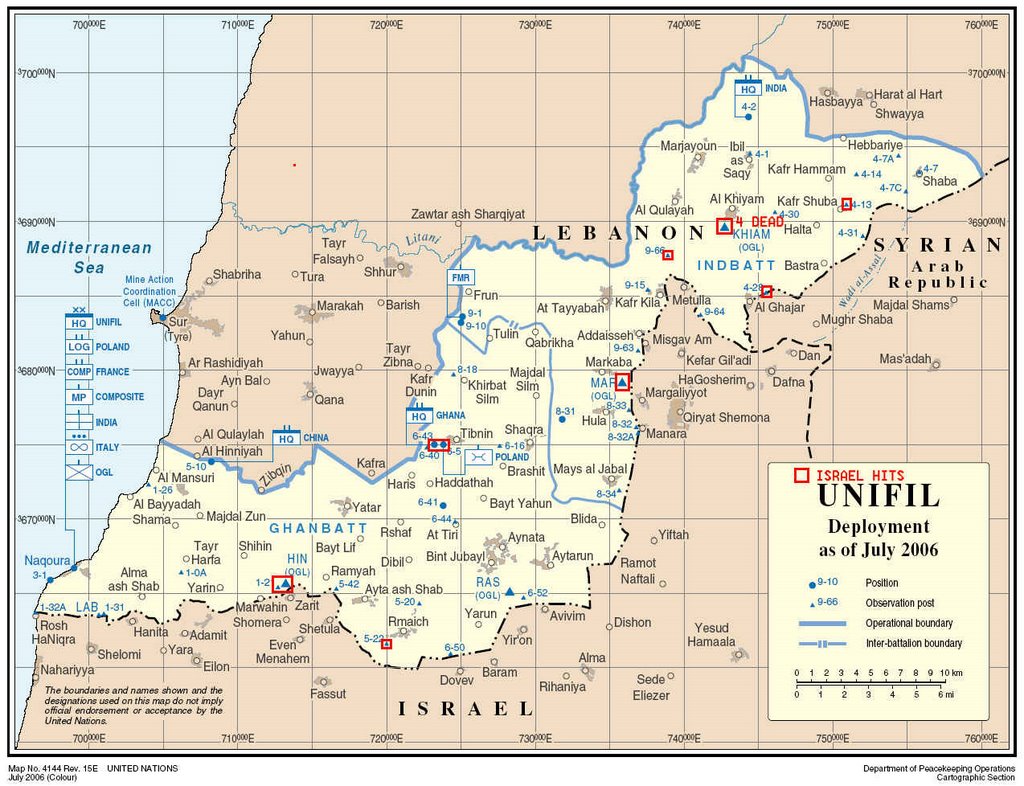
Source: USAID Disaster Assistance daily situation reports, which often cite other sources, like the Lebanese government and the United Nations.
Click for painting, "Lebanon Village 2006"
September 28, 2006
Hands Off Hugo Chavez
Defense Secretary Rumsfeld recently tried to hype "concerns" about Venezuela's military, saying, "I don't know of anyone threatening Venezuela, anyone in this hemisphere."
It's laughable, but you can count on the corporate media to fall in line, and print such statements without question.
So, it's left up to bloggers to remind people of the fact that the US CIA and the military have overthrown numerous Latin American governments in recent decades, remind people that senior US officials, like Elliot Abrams of Iran Contra fame, have been linked to people involved in the 2002 coup who tried to overthrow the elected Venezuelan government, remind people that the US now has a formal military doctrine of preemptive war and has used that doctrine in Iraq, remind people that Venezuela has oil resources that are on par with Saudi Arabia.
It's plain to see that the US is waging a propaganda war against Venezuela, and likely is engaging in covert military activities.
Venezuela is not a threat if we don't threaten Venezuela. But, if the US tries to destabilize Venezuela, then it has a right to defend it's national security interests. People can criticize his style, but Chavez is popularly elected, more than can be said of George Bush.
Related Links:
Chavez Buying Votes
Venezuela Analysis Web Site
It's laughable, but you can count on the corporate media to fall in line, and print such statements without question.
So, it's left up to bloggers to remind people of the fact that the US CIA and the military have overthrown numerous Latin American governments in recent decades, remind people that senior US officials, like Elliot Abrams of Iran Contra fame, have been linked to people involved in the 2002 coup who tried to overthrow the elected Venezuelan government, remind people that the US now has a formal military doctrine of preemptive war and has used that doctrine in Iraq, remind people that Venezuela has oil resources that are on par with Saudi Arabia.
It's plain to see that the US is waging a propaganda war against Venezuela, and likely is engaging in covert military activities.
Venezuela is not a threat if we don't threaten Venezuela. But, if the US tries to destabilize Venezuela, then it has a right to defend it's national security interests. People can criticize his style, but Chavez is popularly elected, more than can be said of George Bush.
Related Links:
Chavez Buying Votes
Venezuela Analysis Web Site
September 13, 2006
Haaretz: Cluster Bomb Article
Just in case Haaretz buries this article....
When rockets and phosphorous cluster
By Meron Rapoport
"In Lebanon, we covered entire villages with cluster bombs, what we did there was crazy and monstrous," testifies a commander in the Israel Defense Forces' MLRS (Multiple Launch Rocket System) unit. Quoting his battalion commander, he said the IDF fired some 1,800 cluster rockets on Lebanon during the war and they contained over 1.2 million cluster bombs. The IDF also used cluster shells fired by 155 mm artillery cannons, so the number of cluster bombs fired on Lebanon is even higher. At the same time, soldiers in the artillery corps testified that the IDF used phosphorous shells, which many experts say is prohibited by international law. According to the claims, the overwhelming majority of the weapons mentioned were fired during the last ten days of the war.
The commander asserted that there was massive use of MLRS rockets despite the fact that they are known to be very inaccurate - the rockets' deviation from the target reaches to around 1,200 meters - and that a substantial percentage do not explode and become mines. Due to these facts, most experts view cluster ammunitions as a "non-discerning" weapon that is prohibited for use in a civilian environment. The percentage of duds among the rockets fired by the U.S. army in Iraq reached 30 percent and the United Nations' land mine removal team in Lebanon claims that the percentage of duds among the rockets fired by the IDF reaches some 40 percent. In light of these figures, the number of duds left behind by the Israeli cluster rockets in Lebanon is likely to reach half a million.
According to the commander, in order to compensate for the rockets' imprecision, the order was to "flood" the area with them. "We have no option of striking an isolated target, and the commanders know this very well," he said. He also stated that the reserve soldiers were surprised by the use of MLRS rockets, because during their regular army service, they were told these are the IDF's "judgment day weapons" and intended for use in a full-scale war.
The commander also said that at least in one case, they were asked to fire cluster rockets toward "a village's outskirts" in the early morning: "They told us that this is a good time because people are coming out of the mosques and the rockets would deter them." In other cases, they fired the rockets at a range of less than 15 kilometers, even though the manufacturer's guidelines state that firing at this range considerably increases the number of duds. The commander further related that during IDF training exercises hardly any live rockets are fired, for fear that they would leave duds behind and fill the IDF's firing grounds with mines.
After being discharged from his reserve duty, the commander sent a letter to Defense Minister Amir Peretz and protested the number of cluster rockets fired in Lebanon, which "perhaps the generals forgot to mention." "As far as the duds are concerned," he wrote, "we have no control over who is hurt. Sooner or later they will explode in people's hands." He has yet to receive a response from the defense minister.
At the same time, soldiers are reporting that they fired phosphorous shells, which are supposed to be used by the IDF for marking or setting fire to areas, in order to start fires in Lebanon. The artillery commander says he saw trucks with phosphorous shells en route to artillery batteries in the North.
A direct hit from a phosphorous shell causes severe burns and a painful death. Around a year ago, there was an international scandal after a television crew presented harsh pictures of the charred bodies of Iraqis injured by phosphorous bombs during the course of the American attack on the city of Fallujah.
International law prohibits the use of weapons that cause "excessive damage and unnecessary suffering," and many experts feel that phosphorous is included in this category. The International Red Cross determined that international law prohibits the use of phosphorous against humans. The American "Book of War," published in 1999, which sets down the rules of war for the American army, states: "The ground war law prohibits the use of phosphorous against human targets." The pact on prohibiting or limiting flammable weapons bans the use of phosphorous against civilian targets and against military targets found amid large civil populations.
The IDF Spokesperson said: "International law does not contain a sweeping ban on the use of cluster bombs. The Conventional Weapons Pact does not stipulate a ban on the use of inflammatory weapons (i.e., phosphorous - M.R.), rather it only offers rules for organizing the use of this weapon. For understandable operational reasons, the IDF will not comment on a detailed listing of the weaponry at its disposal. The IDF uses only methods and weapons that are permitted according to international law. The firing of artillery in general, including the firing of artillery to demolish a target, was initiated in response to firing at the State of Israel only." The defense minister's bureau said in response that it had yet to receive an inquiry on the matter of firing cluster rockets.
When rockets and phosphorous cluster
By Meron Rapoport
"In Lebanon, we covered entire villages with cluster bombs, what we did there was crazy and monstrous," testifies a commander in the Israel Defense Forces' MLRS (Multiple Launch Rocket System) unit. Quoting his battalion commander, he said the IDF fired some 1,800 cluster rockets on Lebanon during the war and they contained over 1.2 million cluster bombs. The IDF also used cluster shells fired by 155 mm artillery cannons, so the number of cluster bombs fired on Lebanon is even higher. At the same time, soldiers in the artillery corps testified that the IDF used phosphorous shells, which many experts say is prohibited by international law. According to the claims, the overwhelming majority of the weapons mentioned were fired during the last ten days of the war.
The commander asserted that there was massive use of MLRS rockets despite the fact that they are known to be very inaccurate - the rockets' deviation from the target reaches to around 1,200 meters - and that a substantial percentage do not explode and become mines. Due to these facts, most experts view cluster ammunitions as a "non-discerning" weapon that is prohibited for use in a civilian environment. The percentage of duds among the rockets fired by the U.S. army in Iraq reached 30 percent and the United Nations' land mine removal team in Lebanon claims that the percentage of duds among the rockets fired by the IDF reaches some 40 percent. In light of these figures, the number of duds left behind by the Israeli cluster rockets in Lebanon is likely to reach half a million.
According to the commander, in order to compensate for the rockets' imprecision, the order was to "flood" the area with them. "We have no option of striking an isolated target, and the commanders know this very well," he said. He also stated that the reserve soldiers were surprised by the use of MLRS rockets, because during their regular army service, they were told these are the IDF's "judgment day weapons" and intended for use in a full-scale war.
The commander also said that at least in one case, they were asked to fire cluster rockets toward "a village's outskirts" in the early morning: "They told us that this is a good time because people are coming out of the mosques and the rockets would deter them." In other cases, they fired the rockets at a range of less than 15 kilometers, even though the manufacturer's guidelines state that firing at this range considerably increases the number of duds. The commander further related that during IDF training exercises hardly any live rockets are fired, for fear that they would leave duds behind and fill the IDF's firing grounds with mines.
After being discharged from his reserve duty, the commander sent a letter to Defense Minister Amir Peretz and protested the number of cluster rockets fired in Lebanon, which "perhaps the generals forgot to mention." "As far as the duds are concerned," he wrote, "we have no control over who is hurt. Sooner or later they will explode in people's hands." He has yet to receive a response from the defense minister.
At the same time, soldiers are reporting that they fired phosphorous shells, which are supposed to be used by the IDF for marking or setting fire to areas, in order to start fires in Lebanon. The artillery commander says he saw trucks with phosphorous shells en route to artillery batteries in the North.
A direct hit from a phosphorous shell causes severe burns and a painful death. Around a year ago, there was an international scandal after a television crew presented harsh pictures of the charred bodies of Iraqis injured by phosphorous bombs during the course of the American attack on the city of Fallujah.
International law prohibits the use of weapons that cause "excessive damage and unnecessary suffering," and many experts feel that phosphorous is included in this category. The International Red Cross determined that international law prohibits the use of phosphorous against humans. The American "Book of War," published in 1999, which sets down the rules of war for the American army, states: "The ground war law prohibits the use of phosphorous against human targets." The pact on prohibiting or limiting flammable weapons bans the use of phosphorous against civilian targets and against military targets found amid large civil populations.
The IDF Spokesperson said: "International law does not contain a sweeping ban on the use of cluster bombs. The Conventional Weapons Pact does not stipulate a ban on the use of inflammatory weapons (i.e., phosphorous - M.R.), rather it only offers rules for organizing the use of this weapon. For understandable operational reasons, the IDF will not comment on a detailed listing of the weaponry at its disposal. The IDF uses only methods and weapons that are permitted according to international law. The firing of artillery in general, including the firing of artillery to demolish a target, was initiated in response to firing at the State of Israel only." The defense minister's bureau said in response that it had yet to receive an inquiry on the matter of firing cluster rockets.
September 12, 2006
Arnold's Blood
According to AP.....
The recording of Arnold Schwarzenegger was made during a speech-writing session in the governor's office last March. In it, he and his chief of staff, Susan Kennedy, speculate lightheartedly about the ethnic background of state Assemblywoman Bonnie Garcia.
After they chat about whether she is Cuban or Puerto Rican, Schwarzenegger says: "They are all very hot. They have the, you know, part of the black blood in them and part of the Latino blood in them that together makes it."
According to Arnold's logic one would reflect on Arnold's Austrian blood and how that parallels his authoritarian tendencies. See how stupid that sounds Arnold?
The recording of Arnold Schwarzenegger was made during a speech-writing session in the governor's office last March. In it, he and his chief of staff, Susan Kennedy, speculate lightheartedly about the ethnic background of state Assemblywoman Bonnie Garcia.
After they chat about whether she is Cuban or Puerto Rican, Schwarzenegger says: "They are all very hot. They have the, you know, part of the black blood in them and part of the Latino blood in them that together makes it."
According to Arnold's logic one would reflect on Arnold's Austrian blood and how that parallels his authoritarian tendencies. See how stupid that sounds Arnold?
September 7, 2006
Take it to a Higer Level
It's a very simple message in these times of a coming debacle of the crumbling plutocratic rule. People around the World know the King has no clothes. It's a moment in history when freedom loving people need find the inner discipline to take it to a higher level of commitment to civics in their own setting.
In Mexico, it appears another election was stolen (closer this time). The legitimacy of the governing institusions are in question. There is talk of a parallel government.
In the US, it appears a couple elections were stolen. The governing institutions have lost their legitimacy: The Congress is controlled by the extreme wing of the Republican Party, and Democrats are jsut as beholden to monied interests in order to be competative in an electoral system that generates huge profits for media conglomerates that charge monopoly rates for political advertizements. The US Supreme Court says this is all "constitutional" and trying to fix the obvious problem is "unconstitutional." The executive branch is above the law.
In New Orleans, some people in public housing were displaced even though their homes were not flooded. They have since been locked out of their homes so that a small number of people can cash in on the high-priced real estate.
And the farce in Lebanon. "Israel was acting in self-defense." Are we to believe this?
With the plutocratic system delegitimized, what are the people to do? Take it to a Higher Level.
A Strategy:
This strategy has three prongs, and is intentionally generic:
1) Address the issues of the Day: Each community faces urgent crises that must be addressed, such as proposed corporate plans that will bring immediate harm to people. Some time must be invested in addressing these issues.
2) Address Mult-generational Struggles: Slavery didn't end until the end of the civil war in about 1865. People were struggling to end slavery in 1810, 1820 decades before major changes came about. We face a similar struggle today against consolidated power, often stored in the form of corporations controlled by the plutocracy. Some time must be invested in this multi-generational struggle to revoke constitutional "rights" from corporations.
3) Identify New Social Structures: It isn't sufficient to simply criticize the current system. Workable alternatives need to be developed and implemented.
It is within this strategic framework that the common people need to take their civic duties to a higher level.
In Mexico, it appears another election was stolen (closer this time). The legitimacy of the governing institusions are in question. There is talk of a parallel government.
In the US, it appears a couple elections were stolen. The governing institutions have lost their legitimacy: The Congress is controlled by the extreme wing of the Republican Party, and Democrats are jsut as beholden to monied interests in order to be competative in an electoral system that generates huge profits for media conglomerates that charge monopoly rates for political advertizements. The US Supreme Court says this is all "constitutional" and trying to fix the obvious problem is "unconstitutional." The executive branch is above the law.
In New Orleans, some people in public housing were displaced even though their homes were not flooded. They have since been locked out of their homes so that a small number of people can cash in on the high-priced real estate.
And the farce in Lebanon. "Israel was acting in self-defense." Are we to believe this?
With the plutocratic system delegitimized, what are the people to do? Take it to a Higher Level.
A Strategy:
This strategy has three prongs, and is intentionally generic:
1) Address the issues of the Day: Each community faces urgent crises that must be addressed, such as proposed corporate plans that will bring immediate harm to people. Some time must be invested in addressing these issues.
2) Address Mult-generational Struggles: Slavery didn't end until the end of the civil war in about 1865. People were struggling to end slavery in 1810, 1820 decades before major changes came about. We face a similar struggle today against consolidated power, often stored in the form of corporations controlled by the plutocracy. Some time must be invested in this multi-generational struggle to revoke constitutional "rights" from corporations.
3) Identify New Social Structures: It isn't sufficient to simply criticize the current system. Workable alternatives need to be developed and implemented.
It is within this strategic framework that the common people need to take their civic duties to a higher level.
September 3, 2006
Lebanon Relief Reflects Damage Inflicted by US/Isreal
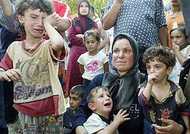 The following Relief was provided by UNHCR to the 40 most devastated villages in the Nabatiye and Tyre districts between August 14 and August 31, 2006 [1]:
Blankets:......... 31,158
Mattresses:........ 6,110
Tents:............. 2,798
Lamps:............. 6,122
Cooking Stoves:.... 2,600
Diapers:.......... 13,455
Kitchen Sets:...... 3,257
Jerry Cans:....... 11,924
Bars of Soap:...... 6,620
Plastic Sheets:.... 8,497
One can't help but think that Israel should pay for this rather than international tax payers who fund the United Nations operations.
... and the reports keep coming in:
World vision has replaced more than 6,800 water storage tanks destroyed in 40 villages in Majayoun and Bent Jbail districts affecting 45,000 people. [2]
Mercy Corps provided food kits to 3,500 families in Baalbek District, as well as textbooks and clothing to 598 orphaned children. [2]
Sources:
[1] USAID August 31, 2006 Situation Report on Lebanon Humanitarian Emergency.
[2] USAID October 27, 2006 Situation Report on Lebanon Humanitarian Emergency.
September 2, 2006
US Prohibitions on Isreali Use of Cluster Bombs
Updated February 4, 2007
 The US has sold cluster bombs to Israel since the 1970s, except for a six year period during the Regan Administration after the Congress determined that Israel had violated US prohibitions on their use.
Photo Credit and narrative, See Note [3]
The US State Department has recently launched an inquiry into Isreal's use of US made cluster bombs to determine if they have violated US prohibitions during their assault on Lebanon in July/August 2006.
What are the US prohibitions on Israel?
There are at least two US arms export frameworks, distinct from other internatinal laws, for which the US has direct oversight:
1) A secret bilateral agreement with Isreal that addresses cluster munitions specifically, and
2) The Arms Export Control Act, which requires foreign governments that receive American weapons to use them for legitimate self-defense.
The US State Department is responsible for oversight of both of these, with additional oversight from Congress on the second. [1]
With regard to (1), the secret agreement on cluster munitions likely addresses a) requirements for Israel to properly informed the United States about its use of the weapons, and b) limitations of use on strictly military targets. [2]
"News accounts over the years have said that [the bilateral agreement] require that the munitions be used only against organized Arab armies and clearly defined military targets under conditions similar to the Arab-Israeli wars of 1967 and 1973." [2] This is supported by a report in Haaretz in which Israeli reserve soldiers expressed that they "were surprised by the use of Multiple Launch Rocket Systems (MLRS), because during their regular army service, they were told these are the IDF's "judgment day weapons" and intended for use in a full-scale war. [4]
In other words, because of the grave downsides of these weapons, their use seems to be limited to a scenario in which Israel risks being overrun by an invading force. If this characterization is correct, Israel's recent use of cluster munitions in civilian-populated villages is likely a violation of this secret bilateral agreement.
With regard to (2), the threshold question is whether or not the situation constituted "self-defense."
An honest analysis of the conflict must conclude that it was an aggressive war of choice by Israel, using Hezbollah's capture of two Israeli soldiers as an excuse. The integrity of Isreal to exist was not threatened, despite Hezbollah's Kytusha rocket attacks in response to Israel's assault on the Lebanese infrastructure. Only a very liberal view of "self-defense" envisioned in the US Arms Export Control Act could justify the use of cluster munitions in this case.
Critics of this view can argue shades of gray on whether or not Israel violated these prohibitions; however, given the terrible legacy caused by unexploded cluster munitions, the interpretation of compliance should not be liberal, but strict; operating in the grey zone should be considered a violation. In this technical view, and in any ethical view, Israel's current use of cluster munitions is clearly in the wrong.
Given a pattern of misuse of cluster munitions by Israel, the US should ban any further sales to Israel. For an article on Israel's recent use of cluster munitions on Lebanon SEE: Lebanon Damage: Indiscriminant Cluster Bombs
Update:
According to the January 30 headlines of DemocracyNow! "On January 29, 2007 State Department spokesperson Sean McCormick acknowledged that Israel likely violated US arms export agreements when it dropped cluster bombs among villages in Lebanon."
Marc Garlasco, of Human Rights Watch, continues, "As a comparison in the war in Iraq in 2003, the United States over three weeks dropped 2 million cluster sub-munitions. Israel in the war in Lebanon dropped 4 million in three days. It dwarfs any use of cluster bombs prior. You can take Iraq, Afghanistan and Kosovo and put them together and you’re not going to come close to what happened in southern Lebanon."
Notes:
[1] "Under the Arms Export Control Act (AECA) and executive order, the Secretary of State is responsible for policy direction and oversight of all arms transfer functions, and for controlling commercial exports of defense articles and services on the U.S. Munitions List." Norman A Wulf, Acting Assistant Director of Nonproliferation and Regional Arms Control, February 24, 1994. Web LINK
[2] New York Times, David Cloud, August 26, 2006. Web LINK
[3] "The M-270 rocket launcher fires US-made M-26 rockets. Each rocket disperses 644 M-77 "bomblets" over an area roughly 350 feet by 650 feet. Each individual M-77 is essentially a small grenade. When deployed from a rocket, these bomblets can be devastating against light-skinned vehicles, such as trucks with mounted artillery rocket launchers, and absolutely deadly for troops out in the open. The rockets are generally fired in salvos and can ravage one-third of a square mile. The United States used the M-26 to great effect in the 1991 Gulf War. It is the ideal weapon to engage Hezbollah fighters firing artillery rockets. As soon as the Israelis detect the location from which Hezbollah has launched rockets, they can obliterate an area too big for the launcher or crew to flee.
Of course, the potential for civilian casualties is high. The M-26 is an indiscriminate weapon by design. The most enduring problem with such cluster munitions is that the entire batch does not always explode. Afghanistan and Iraq are both littered with tiny bomblets that -- to this day -- are maiming and killing civilians." Source: Stratfor: Web LINK
[4] Haaretz, Sept. 11, 2006Web LINK
 The US has sold cluster bombs to Israel since the 1970s, except for a six year period during the Regan Administration after the Congress determined that Israel had violated US prohibitions on their use.
Photo Credit and narrative, See Note [3]
The US State Department has recently launched an inquiry into Isreal's use of US made cluster bombs to determine if they have violated US prohibitions during their assault on Lebanon in July/August 2006.
What are the US prohibitions on Israel?
There are at least two US arms export frameworks, distinct from other internatinal laws, for which the US has direct oversight:
1) A secret bilateral agreement with Isreal that addresses cluster munitions specifically, and
2) The Arms Export Control Act, which requires foreign governments that receive American weapons to use them for legitimate self-defense.
The US State Department is responsible for oversight of both of these, with additional oversight from Congress on the second. [1]
With regard to (1), the secret agreement on cluster munitions likely addresses a) requirements for Israel to properly informed the United States about its use of the weapons, and b) limitations of use on strictly military targets. [2]
"News accounts over the years have said that [the bilateral agreement] require that the munitions be used only against organized Arab armies and clearly defined military targets under conditions similar to the Arab-Israeli wars of 1967 and 1973." [2] This is supported by a report in Haaretz in which Israeli reserve soldiers expressed that they "were surprised by the use of Multiple Launch Rocket Systems (MLRS), because during their regular army service, they were told these are the IDF's "judgment day weapons" and intended for use in a full-scale war. [4]
In other words, because of the grave downsides of these weapons, their use seems to be limited to a scenario in which Israel risks being overrun by an invading force. If this characterization is correct, Israel's recent use of cluster munitions in civilian-populated villages is likely a violation of this secret bilateral agreement.
With regard to (2), the threshold question is whether or not the situation constituted "self-defense."
An honest analysis of the conflict must conclude that it was an aggressive war of choice by Israel, using Hezbollah's capture of two Israeli soldiers as an excuse. The integrity of Isreal to exist was not threatened, despite Hezbollah's Kytusha rocket attacks in response to Israel's assault on the Lebanese infrastructure. Only a very liberal view of "self-defense" envisioned in the US Arms Export Control Act could justify the use of cluster munitions in this case.
Critics of this view can argue shades of gray on whether or not Israel violated these prohibitions; however, given the terrible legacy caused by unexploded cluster munitions, the interpretation of compliance should not be liberal, but strict; operating in the grey zone should be considered a violation. In this technical view, and in any ethical view, Israel's current use of cluster munitions is clearly in the wrong.
Given a pattern of misuse of cluster munitions by Israel, the US should ban any further sales to Israel. For an article on Israel's recent use of cluster munitions on Lebanon SEE: Lebanon Damage: Indiscriminant Cluster Bombs
Update:
According to the January 30 headlines of DemocracyNow! "On January 29, 2007 State Department spokesperson Sean McCormick acknowledged that Israel likely violated US arms export agreements when it dropped cluster bombs among villages in Lebanon."
Marc Garlasco, of Human Rights Watch, continues, "As a comparison in the war in Iraq in 2003, the United States over three weeks dropped 2 million cluster sub-munitions. Israel in the war in Lebanon dropped 4 million in three days. It dwarfs any use of cluster bombs prior. You can take Iraq, Afghanistan and Kosovo and put them together and you’re not going to come close to what happened in southern Lebanon."
Notes:
[1] "Under the Arms Export Control Act (AECA) and executive order, the Secretary of State is responsible for policy direction and oversight of all arms transfer functions, and for controlling commercial exports of defense articles and services on the U.S. Munitions List." Norman A Wulf, Acting Assistant Director of Nonproliferation and Regional Arms Control, February 24, 1994. Web LINK
[2] New York Times, David Cloud, August 26, 2006. Web LINK
[3] "The M-270 rocket launcher fires US-made M-26 rockets. Each rocket disperses 644 M-77 "bomblets" over an area roughly 350 feet by 650 feet. Each individual M-77 is essentially a small grenade. When deployed from a rocket, these bomblets can be devastating against light-skinned vehicles, such as trucks with mounted artillery rocket launchers, and absolutely deadly for troops out in the open. The rockets are generally fired in salvos and can ravage one-third of a square mile. The United States used the M-26 to great effect in the 1991 Gulf War. It is the ideal weapon to engage Hezbollah fighters firing artillery rockets. As soon as the Israelis detect the location from which Hezbollah has launched rockets, they can obliterate an area too big for the launcher or crew to flee.
Of course, the potential for civilian casualties is high. The M-26 is an indiscriminate weapon by design. The most enduring problem with such cluster munitions is that the entire batch does not always explode. Afghanistan and Iraq are both littered with tiny bomblets that -- to this day -- are maiming and killing civilians." Source: Stratfor: Web LINK
[4] Haaretz, Sept. 11, 2006Web LINK
Lebanon Damage: Indiscriminant Cluster Bombs
Updated August 28, 2008
The US Disaster Assistance Response Team Reports that the
presense of unexploded ordinance continues to be the most
significant security concern in the conflict-affected areas
of Lebanon.
- US Government Situation Report, Lebanon, 9/5/06 [6].
The US/Israeli assault on Lebanon in July/August 2006 inflicted awsome damage See: Lebanon Damage Report 2006. A special concern was Israel's use of cluster bombs, which are bombs, missles or artillary shells filled with many smaller bomblets (submunitions). The small bomblets are dispersed over a wide area before they explode individually.
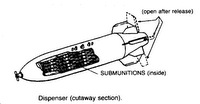
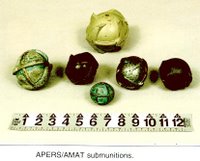 Photo source and narrative [1]
 Cluster bombs are indiscriminant in two regards. First, they spread over large areas (multiple football fields) killikng or maiming anyone in that area, including civilians. Second, a percentage of the small bomblets do not initially explode, remaining live to explode later when disturbed by farmers or curious children.
For these reasons the US has placed prohibitions on Israel's use of US-made cluster bombs. In addition to these prohibitions, there are international prohibitions.[3]
Update: On January 29, 2007 the US State Department issued a statement indicating it was likely that Israel had violated US arms export agreements in its use of cluster munitions in Lebanon the summer of 2006.
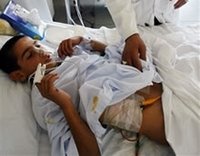 Between the August 12 cease fire in Lebanon and September 9, the United Nations reports 14 civilians have been killed and 66 people injured by cluster bomblets.[2] For example, in the village of Aitta Shaab near the Israeli boarder three children, Sukna, Hassan and Merwa, aged 10 to 12, paused before a curious object. Sukna picked it up. The terrifying blast flung her to the ground, thrusting metal shards into her liver. Hassan's abdomen was cut open. Merwa was hit in the leg and arm. "We thought it was just a little ball," said Hassan with a hoarse whisper in the intensive care ward at Tyre's Jabal Amel hospital. [4]
Update, August 28, 2008: Since the war ended, twenty-seven civilians and thirteen bomb disposal experts have been killed. Over 200 civilians have also been injured by the unexploded ordnance. [9]
Israel faces numerous charges of war crimes. One centers on their indiscriminant use of cluster bombs.
UN Relief Coordinator Jan Egeland said, "What's shocking, and I would say to me completely immoral, is that 90 per cent of [Israel's] cluster bomb strikes occurred in the last 72 hours of the conflict, when we knew there would be a resolution." Egeland notes the cluster bombs have affected large residential and farming areas and could be on the ground for years. "Colleagues in the UN Mine Action Co-Ordination Centre have undertaken assessments of nearly 85 per cent of bombed areas in South Lebanon have identified 359 separate cluster bomb strike locations that are contaminated with as many as 100,000 unexploded bomblets." [5] This figure has now risen to at least 450 sites.[2]
A UN report said American cluster munitions found included 559 M-42’s, an anti-personnel bomblet used in 105-millimeter artillery shells; 663 M-77’s, a submunition found in M-26 rockets See description; and 5 BLU-63’s, a bomblet found in the CBU-26 cluster bomb. Also found were 608 M-85’s, an Israeli-made submunition.
 Haaretz reported that an IDF commander in the unit responsible for multiple launch rocket systems (MLRS), like that in the photo to the right, said his battalion commander estimated the IDF fired some 1,800 cluster rockets on Lebanon during the war and they contained over 1.2 million cluster bomblets. The IDF also used cluster shells fired by 155 mm artillery cannons, so the number of cluster bombs fired on Lebanon is even higher.
The Haaretz article continues, "the United Nations' land mine removal team in Lebanon claims that the percentage of duds among the rockets fired by the IDF reaches some 40 percent. In light of these figures, the number of duds left behind by the Israeli cluster rockets in Lebanon is likely to reach half a million." This is consistent with reports by IDF reservists who report some of the missles were fired at ranges closer than specified by manufacturer guidlines, which leads to more unexploded bomblets. [7]
The MRLS commander said, "In Lebanon, we covered entire villages with cluster bombs, what we did there was crazy and monstrous." [7]
As of October 27, 2006, nearly $6 million in US tax-payer dollars have been spent on demining and clearing of unexploded ordinance in Lebanon. [8]
Sources:
[1] Federation of American Scientists Web LINK
[2] United States Government Situation Report, Lebanon Humanitarian Emergency, USAID citing various sources, September 1, 2006.
[3] 1977 Additional Protocol I to the 1949 Geneva Conventions, which states: “Parties to the conflict shall at all times distinguish between the civilian population and combatants and between civilian objects and military objectives and accordingly shall direct their operations only against military objectives.” Although Israel is not a signatory to this protocol, the protocol is considered "customary international law" that applies to all nations. See Indiscriminant Attack
[4] Declan Walsh, August 22, 2006.
Web LINK
[5] UPI, Heather Murray, August 30, 2006 Web LINK
[6]United States Government Situation Report, Lebanon Humanitarian Emergency, USAID citing various source, Index of reports by date.Web LINK
[7] Haazretz Article published on about September 11, 2006.
Web LINK
[8] USAID Lebanon Situation Report, October 27, 2006. Web LINK
[9] DemocracyNow! Headlines, "Shortage of Funding Halts Mine Sweeping in Lebanon"
August, 25, 2008.
See Also
New York Times, David Cloud, August 26, 2006. Web LINK
DemocracyNow!, Ana Nogueira, August 23, 2006. Web LINK
DemocracyNow!, August 25, 2006. Web LINK
DemocracyNow!, August 30, 2006. Web LINK
DemocracyNow!, August 28, 2008. "Shortage of Funding Halts Mine Sweeping in Lebanon"
The US Disaster Assistance Response Team Reports that the
presense of unexploded ordinance continues to be the most
significant security concern in the conflict-affected areas
of Lebanon.
- US Government Situation Report, Lebanon, 9/5/06 [6].
The US/Israeli assault on Lebanon in July/August 2006 inflicted awsome damage See: Lebanon Damage Report 2006. A special concern was Israel's use of cluster bombs, which are bombs, missles or artillary shells filled with many smaller bomblets (submunitions). The small bomblets are dispersed over a wide area before they explode individually.

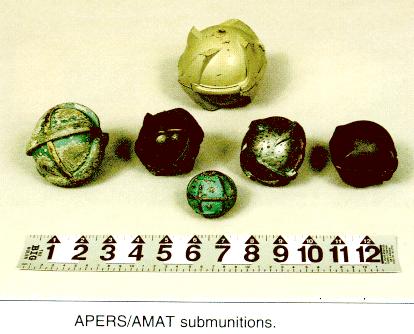 Photo source and narrative [1]
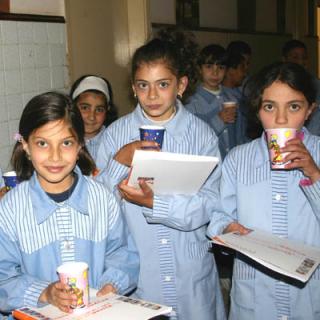 Cluster bombs are indiscriminant in two regards. First, they spread over large areas (multiple football fields) killikng or maiming anyone in that area, including civilians. Second, a percentage of the small bomblets do not initially explode, remaining live to explode later when disturbed by farmers or curious children.
For these reasons the US has placed prohibitions on Israel's use of US-made cluster bombs. In addition to these prohibitions, there are international prohibitions.[3]
Update: On January 29, 2007 the US State Department issued a statement indicating it was likely that Israel had violated US arms export agreements in its use of cluster munitions in Lebanon the summer of 2006.
 Between the August 12 cease fire in Lebanon and September 9, the United Nations reports 14 civilians have been killed and 66 people injured by cluster bomblets.[2] For example, in the village of Aitta Shaab near the Israeli boarder three children, Sukna, Hassan and Merwa, aged 10 to 12, paused before a curious object. Sukna picked it up. The terrifying blast flung her to the ground, thrusting metal shards into her liver. Hassan's abdomen was cut open. Merwa was hit in the leg and arm. "We thought it was just a little ball," said Hassan with a hoarse whisper in the intensive care ward at Tyre's Jabal Amel hospital. [4]
Update, August 28, 2008: Since the war ended, twenty-seven civilians and thirteen bomb disposal experts have been killed. Over 200 civilians have also been injured by the unexploded ordnance. [9]
Israel faces numerous charges of war crimes. One centers on their indiscriminant use of cluster bombs.
UN Relief Coordinator Jan Egeland said, "What's shocking, and I would say to me completely immoral, is that 90 per cent of [Israel's] cluster bomb strikes occurred in the last 72 hours of the conflict, when we knew there would be a resolution." Egeland notes the cluster bombs have affected large residential and farming areas and could be on the ground for years. "Colleagues in the UN Mine Action Co-Ordination Centre have undertaken assessments of nearly 85 per cent of bombed areas in South Lebanon have identified 359 separate cluster bomb strike locations that are contaminated with as many as 100,000 unexploded bomblets." [5] This figure has now risen to at least 450 sites.[2]
A UN report said American cluster munitions found included 559 M-42’s, an anti-personnel bomblet used in 105-millimeter artillery shells; 663 M-77’s, a submunition found in M-26 rockets See description; and 5 BLU-63’s, a bomblet found in the CBU-26 cluster bomb. Also found were 608 M-85’s, an Israeli-made submunition.
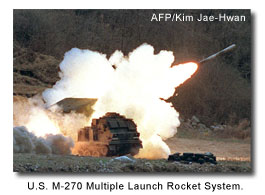 Haaretz reported that an IDF commander in the unit responsible for multiple launch rocket systems (MLRS), like that in the photo to the right, said his battalion commander estimated the IDF fired some 1,800 cluster rockets on Lebanon during the war and they contained over 1.2 million cluster bomblets. The IDF also used cluster shells fired by 155 mm artillery cannons, so the number of cluster bombs fired on Lebanon is even higher.
The Haaretz article continues, "the United Nations' land mine removal team in Lebanon claims that the percentage of duds among the rockets fired by the IDF reaches some 40 percent. In light of these figures, the number of duds left behind by the Israeli cluster rockets in Lebanon is likely to reach half a million." This is consistent with reports by IDF reservists who report some of the missles were fired at ranges closer than specified by manufacturer guidlines, which leads to more unexploded bomblets. [7]
The MRLS commander said, "In Lebanon, we covered entire villages with cluster bombs, what we did there was crazy and monstrous." [7]
As of October 27, 2006, nearly $6 million in US tax-payer dollars have been spent on demining and clearing of unexploded ordinance in Lebanon. [8]
Sources:
[1] Federation of American Scientists Web LINK
[2] United States Government Situation Report, Lebanon Humanitarian Emergency, USAID citing various sources, September 1, 2006.
[3] 1977 Additional Protocol I to the 1949 Geneva Conventions, which states: “Parties to the conflict shall at all times distinguish between the civilian population and combatants and between civilian objects and military objectives and accordingly shall direct their operations only against military objectives.” Although Israel is not a signatory to this protocol, the protocol is considered "customary international law" that applies to all nations. See Indiscriminant Attack
[4] Declan Walsh, August 22, 2006.
Web LINK
[5] UPI, Heather Murray, August 30, 2006 Web LINK
[6]United States Government Situation Report, Lebanon Humanitarian Emergency, USAID citing various source, Index of reports by date.Web LINK
[7] Haazretz Article published on about September 11, 2006.
Web LINK
[8] USAID Lebanon Situation Report, October 27, 2006. Web LINK
[9] DemocracyNow! Headlines, "Shortage of Funding Halts Mine Sweeping in Lebanon"
August, 25, 2008.
See Also
New York Times, David Cloud, August 26, 2006. Web LINK
DemocracyNow!, Ana Nogueira, August 23, 2006. Web LINK
DemocracyNow!, August 25, 2006. Web LINK
DemocracyNow!, August 30, 2006. Web LINK
DemocracyNow!, August 28, 2008. "Shortage of Funding Halts Mine Sweeping in Lebanon"
August 31, 2006
Senate Swing Votes on Network Neutrality
Updated December 17, 2006

If you're reading this you probably know about network neutrality* and are ready to take action "For" Network Neutrality. The following list identifies the US Senators who are are undecided, and thus whose votes will swing the final outcome on Net Neutrality.
What to Do: Contact their offices. Ask for the staff person who covers telecommunicaitons issues, and urge them to vote for Network Neutrality.
Senator Contact Information
What to Say: If asked, the basic reason to suupport Network Neutrality is to ensure everyone's information that travels on the Internet is handled the same way regardless of one's level of wealth (no fast lanes, no toll booths). Network Neutrality helps ensure everyone's speech is on a level playing field, which is critical to the health of our democracy:
Swing Voters on Net Neutrality in the Senate
Alexander, Lamar (R-TN) 202-224-4944
Allard, Wayne (R-CO) 202-224-5941
Baucus, Max (D-MT) 202-224-2651
Bennett, Robert F. (R-UT) 202-224-5444
Bond, Christopher S. (R-MO) 202-224-5721
Brown, Sherrod (D-OH) [New]
Bunning, Jim (R-KY) 202-224-4343
Burr, Richard (R-NC) 202 224-3154
Byrd, Robert C. (D-WV) 202-224-3954 CONTACT
Cardin, Ben (D-MD) [New]
Carper, Thomas (D-DE) 202-224-2441
Casey, Bob Jr. (D-PA) [New]
Chambliss, Saxby (R-GA) 202-224-3521
Coburn, Tom (R-OK) 202 224-5754
Cochran, Thad (R-MS) 202-224-5054
Collins, Susan (R-ME) 202-224-2523
Conrad, Kent (D-ND) 202-224-2043
Corker, Bob (R-TN) [New]
Cornyn, John (R-TX) 202-224-2934
Crapo, Mike (R-ID) 202-224-6142
Dole, Elizabeth (R-NC) 202-224-6342
Domenici, Pete V. (R-NM) 202-224-6621
Durbin, Richard J. (D-IL) 202-224-2152 CONTACT
Enzi, Michael (R-WY) 202-224-3424
Graham, Lindsey (R-SC) 202-224-5972
Grassley, Charles E. (R-IA) 202-224-3744
Gregg, Judd (R-NH) 202-224-3324
Hagel, Chuck (R-NE) 202-224-4224
Hatch, Orrin G. (R-UT) 202-224-5251
Inhofe, James M. (R-OK) 202-224-4721
Isakson, Johnny (R-GA) 202 224-3643
Johnson, Tim (D-SD) 202-224-5842
Klobuchar, Amy (D-MN) [New]
Kohl, Herb (D-WI) 202-224-5653
Kyl, Jon (R-AZ) 202-224-4521
Landrieu, Mary (D-LA) 202-224-5824
Levin, Carl (D-MI) 202-224-622 CONTACT
Lincoln, Blanche Lambert (D-AR) 202-224-4843
Lugar, Richard G. (R-IN) 202-224-4814
Martinez, Mel (R-FL) 202 224-3041
McCaskill, Claire (D-MO) [New]
McConnell, Mitch (R-KY) 202-224-2541
Menendez, Robert (D-NJ) 202-224-4744
Mikulski, Barbara A. (D-MD) 202-224-4654 CONTACT
Murkowski, Lisa (R-AK) 202-224-6665
Murray, Patty (D-WA) 202-224-2621
Reed, Jack (D-RI) 202-224-4642
Roberts, Pat (R-KS) 202-224-4774
Salazar, Ken (D-CO) 202 224-5852
Sessions, Jeff (R-AL) 202-224-4124
Shelby, Richard C. (R-AL) 202-224-5744
Specter, Arlen (R-PA) 202-224-4254 CONTACT
Stabenow, Debbie A. (D-MI) 202-224-4822
Tester, Jon (D-MT) [New]
Thune, John (R-SD) 202 224-2321
Voinovich, George (R-OH) 202-224-3353
Warner, John W. (R-VA) 202-224-2023
Webb, Jim (D-VA) [New]
Whitehouse, Sheldon (D-RI) [New]
Positions of Other Senators
Senator DC Phone Stance For or Against Net Nutrality
Akaka, Daniel K. (D-HI) 202-224-6361 For
Allen, George (R-VA) 202-224-4024 Against
Bayh, Evan (D-IN) 202-224-5623 For
Biden, Jr., Joseph R. (D-DE) 202-224-5042 For
Bingaman, Jeff (D-NM) 202-224-5521 For (Switched since Aug 06)
Boxer, Barbara (D-CA) 202-224-3553 For
Brownback, Sam (R-KS) 202-224-6521 Against
Cantwell, Maria (D-WA) 202-224-3441 For
Clinton, Hillary (D-NY) 202-224-4451 For
Coleman, Norm (R-MN) 202-224-5641 Against (Switched since Oct 06)
Craig, Larry E. (R-ID) 202-224-2752 Against
DeMint, Jim (R-SC) 202 224-6121 Against
Dodd, Christopher J. (D-CT) 202-224-2823 For
Dorgan, Byron L. (D-ND) 202-224-2551 For
Ensign, John (R-NV) 202-224-6244 Against
Feingold, Russell D. (D-WI) 202-224-5323 For
Feinstein, Dianne (D-CA) 202-224-3841 For
Harkin, Tom (D-IA) 202-224-3254 For
Hutchison, Kay Bailey (R-TX) 202-224-5922 Against
Inouye, Daniel K. (D-HI) 202-224-3934 For
Jeffords, James M. (I-VT) 202-224-5141 For
Kennedy, Edward M. (D-MA) 202-224-4543 For (Switched since Aug 06)
Kerry, John F. (D-MA) 202-224-2742 For
Lautenberg, Frank (D-NJ) 202-224-3224 For
Leahy, Patrick J. (D-VT) 202-224-4242 For
Lieberman, Joesph I. (D-CT) 202-224-4041 For (Switched since Oct 06) CONTACT
Lott, Trent (R-MS) 202-224-6253 Against
McCain, John (R-AZ) 202-224-2235 Against
Nelson, Bill (D-FL) 202-224-5274 For
Nelson, Ben (D-NE) 202-224-6551 For
Obama, Barack (D-IL) 202 224-2854 For
Pryor, Mark (D-AR) 202-224-2353 For
Reid, Harry (D-NV) 202-224-3542 For
Rockefeller, John D. (D-WV) 202-224-6472 For
Schumer, Charles (D-NY) 202-224-6542 For
Smith, Gordon (R-OR) 202-224-3753 Against
Snowe, Olympia (R-ME) 202-224-5344 For
Stevens, Ted (R-AK) 202-224-3004 Against
Sununu, John (R-NH) 202-224-2841 Against
Thomas, Craig (R-WY) 202-224-6441 Against
Vitter, David (R-LA) 202 224-4623 Against
Wyden, Ron (D-OR) 202-224-5244 For
Out of Office As of Jan. 2007:
Burns, Conrad R. (R-MT) 202-224-2644 Against
Chafee, Lincoln D. (R-RI) 202-224-2921
Dayton, Mark (D-MN) 202-224-3244 For
DeWine, Mike (R-OH) 202-224-2315
Frist, William H. (R-TN) 202-224-3344
Santorum, Rick (R-PA) 202-224-6324
Sarbanes, Paul S. (D-MD) 202-224-4524
Talent, Jim (R-MO) 202-224-6154
For More Information Visit "Save The Internet:"Web LINK
Notes:
* Network Neutrality is the fundamental principle that ensures I don't have to pay an extra fee for this web page to be as rapidly down-loaded as any other similarly designed web page on the Internet. Said another way, Net Neutrality ensures everyone has equal access to the Internet, rather than having to pay cable and phone compaines an added fee to ensure that your information flows over the Internet unimpeded.

If you're reading this you probably know about network neutrality* and are ready to take action "For" Network Neutrality. The following list identifies the US Senators who are are undecided, and thus whose votes will swing the final outcome on Net Neutrality.
What to Do: Contact their offices. Ask for the staff person who covers telecommunicaitons issues, and urge them to vote for Network Neutrality.
Senator Contact Information
What to Say: If asked, the basic reason to suupport Network Neutrality is to ensure everyone's information that travels on the Internet is handled the same way regardless of one's level of wealth (no fast lanes, no toll booths). Network Neutrality helps ensure everyone's speech is on a level playing field, which is critical to the health of our democracy:
Swing Voters on Net Neutrality in the Senate
Alexander, Lamar (R-TN) 202-224-4944
Allard, Wayne (R-CO) 202-224-5941
Baucus, Max (D-MT) 202-224-2651
Bennett, Robert F. (R-UT) 202-224-5444
Bond, Christopher S. (R-MO) 202-224-5721
Brown, Sherrod (D-OH) [New]
Bunning, Jim (R-KY) 202-224-4343
Burr, Richard (R-NC) 202 224-3154
Byrd, Robert C. (D-WV) 202-224-3954 CONTACT
Cardin, Ben (D-MD) [New]
Carper, Thomas (D-DE) 202-224-2441
Casey, Bob Jr. (D-PA) [New]
Chambliss, Saxby (R-GA) 202-224-3521
Coburn, Tom (R-OK) 202 224-5754
Cochran, Thad (R-MS) 202-224-5054
Collins, Susan (R-ME) 202-224-2523
Conrad, Kent (D-ND) 202-224-2043
Corker, Bob (R-TN) [New]
Cornyn, John (R-TX) 202-224-2934
Crapo, Mike (R-ID) 202-224-6142
Dole, Elizabeth (R-NC) 202-224-6342
Domenici, Pete V. (R-NM) 202-224-6621
Durbin, Richard J. (D-IL) 202-224-2152 CONTACT
Enzi, Michael (R-WY) 202-224-3424
Graham, Lindsey (R-SC) 202-224-5972
Grassley, Charles E. (R-IA) 202-224-3744
Gregg, Judd (R-NH) 202-224-3324
Hagel, Chuck (R-NE) 202-224-4224
Hatch, Orrin G. (R-UT) 202-224-5251
Inhofe, James M. (R-OK) 202-224-4721
Isakson, Johnny (R-GA) 202 224-3643
Johnson, Tim (D-SD) 202-224-5842
Klobuchar, Amy (D-MN) [New]
Kohl, Herb (D-WI) 202-224-5653
Kyl, Jon (R-AZ) 202-224-4521
Landrieu, Mary (D-LA) 202-224-5824
Levin, Carl (D-MI) 202-224-622 CONTACT
Lincoln, Blanche Lambert (D-AR) 202-224-4843
Lugar, Richard G. (R-IN) 202-224-4814
Martinez, Mel (R-FL) 202 224-3041
McCaskill, Claire (D-MO) [New]
McConnell, Mitch (R-KY) 202-224-2541
Menendez, Robert (D-NJ) 202-224-4744
Mikulski, Barbara A. (D-MD) 202-224-4654 CONTACT
Murkowski, Lisa (R-AK) 202-224-6665
Murray, Patty (D-WA) 202-224-2621
Reed, Jack (D-RI) 202-224-4642
Roberts, Pat (R-KS) 202-224-4774
Salazar, Ken (D-CO) 202 224-5852
Sessions, Jeff (R-AL) 202-224-4124
Shelby, Richard C. (R-AL) 202-224-5744
Specter, Arlen (R-PA) 202-224-4254 CONTACT
Stabenow, Debbie A. (D-MI) 202-224-4822
Tester, Jon (D-MT) [New]
Thune, John (R-SD) 202 224-2321
Voinovich, George (R-OH) 202-224-3353
Warner, John W. (R-VA) 202-224-2023
Webb, Jim (D-VA) [New]
Whitehouse, Sheldon (D-RI) [New]
Positions of Other Senators
Senator DC Phone Stance For or Against Net Nutrality
Akaka, Daniel K. (D-HI) 202-224-6361 For
Allen, George (R-VA) 202-224-4024 Against
Bayh, Evan (D-IN) 202-224-5623 For
Biden, Jr., Joseph R. (D-DE) 202-224-5042 For
Bingaman, Jeff (D-NM) 202-224-5521 For (Switched since Aug 06)
Boxer, Barbara (D-CA) 202-224-3553 For
Brownback, Sam (R-KS) 202-224-6521 Against
Cantwell, Maria (D-WA) 202-224-3441 For
Clinton, Hillary (D-NY) 202-224-4451 For
Coleman, Norm (R-MN) 202-224-5641 Against (Switched since Oct 06)
Craig, Larry E. (R-ID) 202-224-2752 Against
DeMint, Jim (R-SC) 202 224-6121 Against
Dodd, Christopher J. (D-CT) 202-224-2823 For
Dorgan, Byron L. (D-ND) 202-224-2551 For
Ensign, John (R-NV) 202-224-6244 Against
Feingold, Russell D. (D-WI) 202-224-5323 For
Feinstein, Dianne (D-CA) 202-224-3841 For
Harkin, Tom (D-IA) 202-224-3254 For
Hutchison, Kay Bailey (R-TX) 202-224-5922 Against
Inouye, Daniel K. (D-HI) 202-224-3934 For
Jeffords, James M. (I-VT) 202-224-5141 For
Kennedy, Edward M. (D-MA) 202-224-4543 For (Switched since Aug 06)
Kerry, John F. (D-MA) 202-224-2742 For
Lautenberg, Frank (D-NJ) 202-224-3224 For
Leahy, Patrick J. (D-VT) 202-224-4242 For
Lieberman, Joesph I. (D-CT) 202-224-4041 For (Switched since Oct 06) CONTACT
Lott, Trent (R-MS) 202-224-6253 Against
McCain, John (R-AZ) 202-224-2235 Against
Nelson, Bill (D-FL) 202-224-5274 For
Nelson, Ben (D-NE) 202-224-6551 For
Obama, Barack (D-IL) 202 224-2854 For
Pryor, Mark (D-AR) 202-224-2353 For
Reid, Harry (D-NV) 202-224-3542 For
Rockefeller, John D. (D-WV) 202-224-6472 For
Schumer, Charles (D-NY) 202-224-6542 For
Smith, Gordon (R-OR) 202-224-3753 Against
Snowe, Olympia (R-ME) 202-224-5344 For
Stevens, Ted (R-AK) 202-224-3004 Against
Sununu, John (R-NH) 202-224-2841 Against
Thomas, Craig (R-WY) 202-224-6441 Against
Vitter, David (R-LA) 202 224-4623 Against
Wyden, Ron (D-OR) 202-224-5244 For
Out of Office As of Jan. 2007:
Burns, Conrad R. (R-MT) 202-224-2644 Against
Chafee, Lincoln D. (R-RI) 202-224-2921
Dayton, Mark (D-MN) 202-224-3244 For
DeWine, Mike (R-OH) 202-224-2315
Frist, William H. (R-TN) 202-224-3344
Santorum, Rick (R-PA) 202-224-6324
Sarbanes, Paul S. (D-MD) 202-224-4524
Talent, Jim (R-MO) 202-224-6154
For More Information Visit "Save The Internet:"Web LINK
Notes:
* Network Neutrality is the fundamental principle that ensures I don't have to pay an extra fee for this web page to be as rapidly down-loaded as any other similarly designed web page on the Internet. Said another way, Net Neutrality ensures everyone has equal access to the Internet, rather than having to pay cable and phone compaines an added fee to ensure that your information flows over the Internet unimpeded.
August 29, 2006
Bush Leading the Nation into Another Trap: Iran
A picture is worth... a hell of a lot when you're contemplating a war-of-choice on Iran. See how big Iran is compared to Iraq, where Stratfor's George Friedman has proclaimed that the US military has lost the war? Web LINK
See tiny Lebanon, where Israel used Covert Commandos, a Navel Blockade, surgical airstrikes consisting of about 7,000 bombs, and boots on the ground? Israel failed, but not after sullying its reputation by managing to kill civilians at a ratio of about 75% with a child-kill ratio of about 33%. Israel has also placed itself at risk of war crimes and having to pay to rebuild the infrastructure of Lebanon. See: Hezbollah Clearly the Winner.
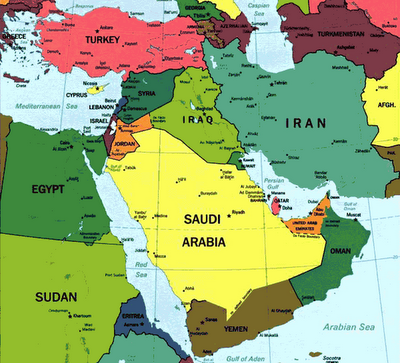
Read FauxNews' military experts and you would think that using a couple of the available military option on Iran is a good idea. Fox: Military Options The options sound familiar: Use Covert Commandos, a Naval Blockade, surgical strikes. Even the FauxNews military experts shy away from the "boots-on-the-ground" option, because, "The U.S. military is already stretched thin with its commitments in Afghanistan and Iraq."
In other words, the FauxNews proposal is to attack Iran using at most three of the four options used unsuccessfully by Israel in teeny weeny Lebanon, against an irregular militia of 2,500.
Remember during the first 2004 debate, Bush admitted we fell into a trap, "we thought we'd whip more of them going in. But because Tommy Franks did such a great job in planning the operation, we moved rapidly, and a lot of the Baathists and Saddam loyalists laid down their arms and disappeared. I thought they would stay and fight, but they didn't. And now we're fighting them now. And it's hard work."
Bush led the Nation into a trap in Iraq. Look at the map, and the size of Iran. Bush and FauxNews are leading the Nation into another trap in Iran.
See tiny Lebanon, where Israel used Covert Commandos, a Navel Blockade, surgical airstrikes consisting of about 7,000 bombs, and boots on the ground? Israel failed, but not after sullying its reputation by managing to kill civilians at a ratio of about 75% with a child-kill ratio of about 33%. Israel has also placed itself at risk of war crimes and having to pay to rebuild the infrastructure of Lebanon. See: Hezbollah Clearly the Winner.
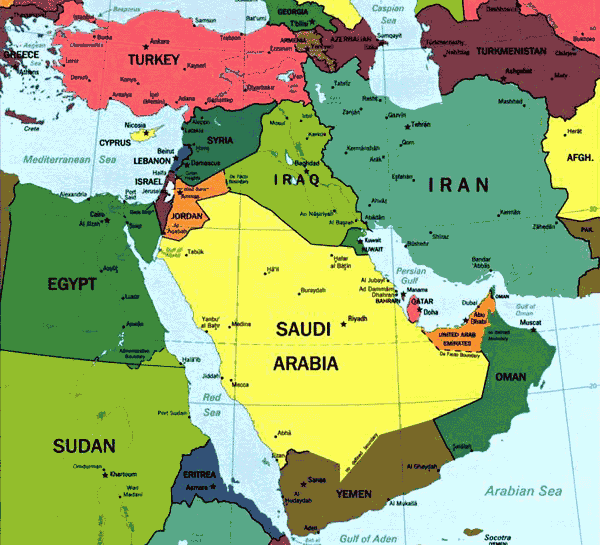
Read FauxNews' military experts and you would think that using a couple of the available military option on Iran is a good idea. Fox: Military Options The options sound familiar: Use Covert Commandos, a Naval Blockade, surgical strikes. Even the FauxNews military experts shy away from the "boots-on-the-ground" option, because, "The U.S. military is already stretched thin with its commitments in Afghanistan and Iraq."
In other words, the FauxNews proposal is to attack Iran using at most three of the four options used unsuccessfully by Israel in teeny weeny Lebanon, against an irregular militia of 2,500.
Remember during the first 2004 debate, Bush admitted we fell into a trap, "we thought we'd whip more of them going in. But because Tommy Franks did such a great job in planning the operation, we moved rapidly, and a lot of the Baathists and Saddam loyalists laid down their arms and disappeared. I thought they would stay and fight, but they didn't. And now we're fighting them now. And it's hard work."
Bush led the Nation into a trap in Iraq. Look at the map, and the size of Iran. Bush and FauxNews are leading the Nation into another trap in Iran.
August 26, 2006
Stratfor: US Has Lost Iraq War
 "The US must now make an enormously difficult decision. If it simply withdraws from Iraq, it leaves the Arabian Peninsula open to Iran and loses all psychological advantage it gained with the invasion of Iraq.[1] If American forces stay in Iraq, it will be as a purely symbolic gesture, without any hope for imposing a solution." [2]
In other words, the US has lost the Iraq war. The grunts on the ground in Iraq will know that the risk they are taking, with shrapnel zining by their heads, is for no good cause.
In other words, the Bush administration has made a huge, predictable blunder... but I still ask, did they do this on purpose for some ulterior motive, such as, "Less Government" and thus more corporate power?
Notes:
[1] It could be argued that any psychological advantage is already lost. See:
James Galbraith Observation in the last paragraph of my post "Hezbollah is Clearly the Winner."
[2] George Friedman, Stratfor, "Breakpoint: What went wrong," reprinted in John Mauldin's August Issue of "Outside the Box."
Web LINK
[3] Implications for getting drawn into war with Iran. Analysis Suggesting Near-Insurmountable Pressures will pull the US into war in Iran
August 22, 2006
Mortgages and Real Estate Price Booms
Did you know.....
About 40-percent of the real estate price booms have resulted in a "bust"[1][2]. These usually have coincided with tightening fiscal policies, as we've just witnessed in repeated increases in interest rates by the Federal Reserve.
"Historically, if a boom cycle was followed by a bust, real housing prices contracted 25 to 30 percent from crest to trough, lasting on average from 3-5 years." [1]
The word "mortgage" is ranked 6th in the Top 100 searched phrases (Google). Musicians will be happy to note the work "lyrics" is 7th. Snes Roms is number 10.
Sources:
[1] 2006 World Economic Outlook report by the IMF.Web LINK
[2] A "bust" is defined in the 2006 WEO as the lowest 25% of price changes on record, which can be a negative change, or price drop.
About 40-percent of the real estate price booms have resulted in a "bust"[1][2]. These usually have coincided with tightening fiscal policies, as we've just witnessed in repeated increases in interest rates by the Federal Reserve.
"Historically, if a boom cycle was followed by a bust, real housing prices contracted 25 to 30 percent from crest to trough, lasting on average from 3-5 years." [1]
The word "mortgage" is ranked 6th in the Top 100 searched phrases (Google). Musicians will be happy to note the work "lyrics" is 7th. Snes Roms is number 10.
Sources:
[1] 2006 World Economic Outlook report by the IMF.Web LINK
[2] A "bust" is defined in the 2006 WEO as the lowest 25% of price changes on record, which can be a negative change, or price drop.
August 21, 2006
Iraq and The Length of World War II

World War II: 1,248 Days (12/7/41 - 5/8/45)
Bush's Iraq War: 1,250 Days and Counting (3/19/2003 - ?)
Source: The Carpetbagger Report for more
Alternative Count: November 26, 2006 TOM RAUM, Associated Press
August 19, 2006
Freedom and Fear
 Writer Alan Paton's "Cry, The Beloved Country," set in 1940s South Africa, includes a revealing passage that explores the fears whites had of the natives. In doing so, he touches on several forms of freedom and the conflicts between them: Freedom for the natives, freedom of white's conscience, freedom from fear of the known and unknown. A similar situation exists between so-called "terrorists" and people who accept President George Bush's framing of the World.
Yes, there are a hundred, and a thousand voices crying. But what does one do, when one cries for this thing, and one cries for another? Who knows how we shall fashion a land of peace where black outnumbers white so greatly? Some say that the earth has bounty enough for all, and that more for one does not mean less for another, that the advance of one does not mean the decline of another. They say that poor-paid labour means greater markets and greater scope for industry and manufacture. And others say that this is a danger, for better-paid labour will not only buy more but will also read more, think more, ask more, and will not be content to be forever voiceless and inferior.
Who knows how we shall fashion such a land? For we fear not only the loss of our possessions, but the loss of our superiority and the loss of our whiteness. Some say it is true that crime is bad, but would this not be worse? Is it not better to hold what we have, and to pay the price of it with fear? And others say, can such fear be endured? For is it not this fear that drives men to ponder these things at all?
We do not know, we do not know. We shall live from day to day, and put more locks on the doors, and get a fine fierce dog when the fine fierce bitch next door has pups, and hold on to our handbags more tenaciously; and the beauty of the trees by night, and the raptures of lovers under the stars, these things we shall forego. We shall forego the coming home drunken through the midnight streets, and the evening walk over the star-lit veld. We shall be careful, and knock this off, and knock that off our lives, and hedge ourselves about with safety and precaution. And our lives will shrink, but they shall be the lives of superior beings; and we shall live with fear, but at least it will not be a fear of the unknown. And the conscience shall be thrust down; the light of life shall not be extinguished, but be put under a bushel, to be preserved for a generation that will live by it again, in some day not yet come; and how it will come, and when it will come, we shall not think about at all.
Subscribe to:
Posts (Atom)