Guest Writer: L. Vincent SebastianFINAL in a Three-Part Series,
My recent posting, “Privatizing the War in Iraq”, describes the Bush administration’s growing reliance on private contractors such as Blackwater USA to conduct military operations in Iraq. Yet, the issues and potential problems with private contractors described in that posting are only the tip of the iceberg. In the new posting below, the many problems surrounding private military firms (PMFs) are more fully laid out. The source material for this posting is: P.W. Singer, “Corporate Warriors: The Rise and Ramifications of the Privatized Military Industry”, International Security, Vol. 26, No. 3, Winter 2001/2002. Although Singer’s article, turned into a book, was published before the U.S. invasion of Iraq, its relevance has only increased in the last five years.Impacts of the Privatized Military Industry on Conflict, Security, and Public PolicyThe likely consequences of PMF activities fall into three broad categories: contractual dilemmas; military market dynamics and disruptions on security relations; and the policy impact of PMFs as alternative military actors.
(1) Contractual Dilemmas. Three types of contractual dilemmas are considered: the financial bottom line; monitoring and oversight, and the dependences of states on PMFs.
(a) The Bottome Line. At issue here are divided loyalties and different goals. Clear tensions exist between the client's security objectives and the PMF’s desire to maximize profit, so that the public good and the PMF’s good often conflict. In spite of claims to the contrary, the PMF may not act only in its client’s best interests. Given that the PMF’s focus is on the bottom line, it may have an incentive to cut corners to increase profits. For example, during the Balkans conflict, Brown & Root (a subsidiary of Halliburton) is alleged to have failed to deliver or severely overcharged the U.S. Army on four out of seven of its contractual obligations. In addition, PMFs have similar financial incentives to prolong their contracts and to avoid taking undue risks that might endanger their own corporate assets. The result may be a protracted conflict that could have been avoided. Finally, it is no stretch to imagine two arms of a large PMF contracting to support opposing sides in a conflict.
(b) Monitoring and Oversight. Few clients have experience in contracting with PMFs, and frequently there is little oversight and/or a lack of clearly defined requirements. Add in the fog of war, and proper monitoring becomes extremely difficult. Moreover, the actual consumer may not be the contracting party. Some nation-states pay PMFs to supply personnel on their behalf to their allies or to international organizations. The accountability gap between the server and served is becomes much wider in such cases.
(c) Dependence. As the use of PMFs becomes increasingly popular, so too does the danger that clients will become overly dependent on PMF services. Reliance on PMFs means that the client’s strategic success is vulnerable to changes in market conditions and to the client-PMF balance of power. This can result in three potential risks to the client. First, the PMF might leave its client in the lurch. A PMF may have no compunction about suspending a contract if a situation becomes financially or physically too risky. Because they are typically based elsewhere, and in the absence of applicable international laws to enforce compliance, PMFs face no real risk of punishment if they defect from their contractual obligations. The employees of PMFs cannot be forced to stay at their posts in the face danger. To the extent that entire military functions such as weapons maintenance and supply have become privatized, the entire military machine would break down if even a modest number of PMF employees chose to leave.
Second, the PMF might gain dominance over the client. In weak or failed nation-states, PMFs, which are often the most powerful force on the local scene, may take steps to protect their own interests. Thus early termination of a contract, dissatisfaction with the terms of payment, or disagreements over specific orders could lead to unpleasant repercussions for a weak client. For example, it is suspected that in 1996 Executive Outcomes helped to oust the leader of Sierra Leone, who headed the very regime that had hired it, in favor of another local general with whom the firm’s executives had a better working relationship.
Third, the PMF might engage in economic imperialism. Clients of (type 1, military provider) PMFs are often those most in need but least able to pay and thus at the highest risk of default. This imbalance can lead to the mortgaging of valuable public assets to the PMF or its associates in an attempt to align the client’s and firm’s incentives. For example, the PMF may obtain mineral rights following the fulfillment of its contract, or possibly in exchange for protecting those very resources and their production. A variation of this is the client’s promise to pay the PMF in public resources or assets currently held by enemy forces, following a successful campaign. Ultimately, the result is that valuable resources for the nation as a whole are lost in order to meet short-term exigencies.
(2) Military Market Dynamics and Disruptions. Military market dynamics and disruptions can complicate international security because military powers are no longer exclusively sovereign states but include private players. The privatized military industry is an independent, globalized supplier operating beyond any one state’s domain. Non-state actors can access formidable military capabilities, and where state structures are weak, the result is a direct challenge to state sovereign authority. Even when PMFs are hired by strong states, decision making shifts beyond the states’ immediate control and is subject to the PMF’s own motivations, with all of the uncertainty that these processes entail. The very act of military outsourcing also runs counter to the tenet that states seek to maximize their power through self-sufficiency in order to minimize their reliance on others. Five potential impacts or disruptions on the state or global security environment caused by the private military industry are considered below.
(a) The New Fungibility of Power. Today, the entire spectrum of conventional forces can be obtained in a matter of days or weeks, for a price. A state or non-state entity need not have a large population, institutional support or expertise in order to wield capable military might. The barriers to acquiring military strength are lowered, making power more fungible than ever.
This ability to quickly transform money or other economic assets into force – that is, into a military threat – makes economic power itself more threatening, contrary to conventional assumptions. The capitalist ethos tends to assume only what is positive about the profit motive, and the spread of capitalism and globalism is seen, conventionally, as a way to reduce the incentives for violent conflict. However, the emergence of the PMF as a new type of private transnational firm, which relies instead on the existence of conflict for its profits, counters the assumption that non-state economic actors are generally peace orientated.
(b) New Complexities in the Balance of Power. The privatized military industry lies beyond any one state's control. The uncertainties of a dynamic global market creates major complications for the already-difficult task of assessing the balance of power between states. In an open market, where a wide range of military services can be procured, likely outcomes become increasingly difficult to discern. Once-predictable deterrence relationships can rapidly collapse, and the hire of PMFs can quickly and unexpectedly tilt local balances of power. Arms races might become instant bidding wars on the open market, with adversaries competing first for PMF services before taking to the battlefield. The result is that the pace of the race is accelerated, and first-mover advantages are heightened. Indeed, such changes could well increase the likelihood of war initiation and preemptive strikes. In addition, conventional arms control is made more difficult with the existence of this market. A nation-state can reduce its in-house force capacity, perhaps to comply with a treaty or avoid sanctions, without reducing its overall threat potential.
(c) Changes in Strategic Relationships. The privatized military market has fundamentally altered the former patron-client relationships of the Cold War. Instead of bowing to the demands of their superpower patrons in exchange for support and protection, weaker states can buy the military skills, training, and capabilities that they need on the open market. As a result, the patron’s leverage is diminished, and weaker states are no longer bound by their patrons’ prerogatives.
Traditionally, states in alliances have divided up their military tasks, making them more dependent on one another in the process. Now that PMFs can perform some of these tasks, mutual reliance among allied states is effectively reduced. A state may then feel less need for the approval of its allies in conducting its own affair, and ultimately the alliance may become weakened. For example, NATO members rely on the U.S. to supply much of its external deployment capacity (e.g., lift capacity, logistics, intelligence gathering and analysis). However, this capacity could also be adequately supplied by type 3 PMFs (military support firms).
The PMF market also makes available new forms of aid and alliances. Because PMFs allow the easy conversion of financial resources into military might, allies can provide military aid in the guise of simple cash infusions. The rationale for this new form of aid is that it lowers potential risks for donors by reducing the likelihood of their becoming embroiled in their allies’ fighting. In addition, possible donors are no longer restricted to states. With equal ability to pay, non-state actors, including even rich individuals, can become valuable allies, able to bolster local forces and shift military balances from a distance.
(d) Non-State Actors Empowered. The global private military industry provides easy access to military services, and therefore provides non-state actors with new options and paths to power not imagined until recently. The increase in military capability of non-state groups has resulted in a widening of conflicts and a lessening of weak states’ ability to put down internal opposition. In the current unregulated market, PMFs decide for whom they work. Thus far, they have contracted with all types of clients, from reputable governments to unsavory customers; the only limitation being the ability of the client to pay. Although some PMFs contend that they work only for reputable states, both the structure of the market and the record so far argue against this. Because firms make decisions that are in their own (financial) interest, single-shot payoffs from disreputable clients might prove too great a temptation, especially if the relationship can be hidden. PMFs that have difficulty attracting the business of reputable clients in the competitive market are the most likely to work with violent non-state entities.
(e) The Military Market Human Rights Abuses. Tensions exist regarding the impact of PMFs on human rights during conflict. On the one hand, PMFs point to market incentives for engaging in good behavior, as their long-term profits are partly dependent on having a good public image. PMFs also emphasize the positive impact that they might have in helping to professionalize local forces. On the other hand, however, war is a business in which nice firms might not finish first. PMF aspirations of corporate responsibility and a good-guy image may be overridden by the need to fulfill a contract or by the desire to be seen as the kind of firm that gets things done. Thus, in certain situations human rights may be transgressed for the corporate interest. For example, Executive Outcomes is known to have used fuel air explosives (FAEs or vacuum bombs) in its Angola operations. International organizations regard the use of FAEs as a transgression of human rights, because they inflict particularly torturous injuries. But FAEs are also highly effective, which explains why a firm would choose to use them.
The private military industry is an outlet for those naturally drawn to mercenary work and is likely to attract disreputable players looking for the cover of legitimacy. As employers, PMFs want to hire individuals who will be effective, even if this means casting a blind eye on past human rights abuses. As a result, many members of the most ruthless military and intelligence units (from the Soviet Union and the apartheid regime in South Africa) have found employment in the industry. Even when firms scrupulously screen prospective employees (which is easier said than done, given that most CVs do not have an “atrocities committed” section), it is still difficult to monitor troops in the field. If employees do commit violations, there is little incentive for firms to report them. A firm that does so risks scaring off both clients and prospective employees. Even if external legal action or sanctions were attempted, it is doubtful whether any PMF would allow its employees to be tried in a client state’s judicial system.
The ultimate problem with PMFs is that they diffuse responsibility. Questions about who monitors, regulates, and punishes employees or companies that go astray (“rogue firms”) have not been fully answered. That many of these firms are chartered in offshore accounts complicates the matter even further. In sum, privatization provides no greater assurance of moral military behavior and may even produce countervailing incentives.
(3) The Policy Impact of PMFs as Alternative Military Actors. The civilian-military relationship is a story of institutional balance (and sometimes imbalance), where civilian control over the military vies with the military’s need for autonomy to do its jobs. The privatized military industry may upset this balance because it supplants core military positions and functions. PMFs may be attractive to leaders, to the extent that they allow them to get rid of politically unreliable or untrustworthy military officers. Of course, local militaries know this and may seek to preempt such action if PMFs are to deploy. Additionally, the hire of PMFs would be destabilizing if any of the following conditions applies: (a) PMF employees receive higher pay than local soldiers for performing similar tasks; (b) PMF employees have vastly better equipment, (c) PMF employees are kept separate and distinct from local forces, or (d) PMF officers are placed in command positions or their presence blocks normal promotion tracks. At least (a) and (b), and possible (c) and (d) as well, are common in the relationship between U.S. troops and private forces currently in Iraq.
The rise of the privatized military industry provides a new means for leaders to evade public policy restrictions. In the U.S., for example, the executive branch can use PMFs as a means to circumvent limits placed on it by the Congress or by public opinion. The president, as commander in chief, may resort to using PMFs if he wishes to avoid the potential political costs of other actions (e.g., reinstating the draft), or if Congress places limits on troop numbers. Recourse to PMFs therefore has negative implications for the democratic principle of checks and balances. It may allow the executive branch to gain too much autonomy and power and undertake public-private activities against the intent of Congress.
The use of PMFs also allows the executive branch to avoid both public debate of its policies and accountability for results. Responsibility and accountability on the part of public officials are greatly diminished because the use of PMFs moves decision making power one step further away from elected representatives. The use of PMFs instead of official covert action provides the cover of plausible deniability that public forces lack. If an operation goes awry, the activities of a firm are easier for a government to deny and the blame easier to shift. But, without public debate and monitoring, the actions of PMFs may prove embarrassing or worse. In Colombia, for example, Airscan was implicated in coordinating the bombing of a village in which eighteen civilians (including nine children) were killed. In addition, PMF operations might even backfire and ultimately involve the client in direct fighting without the requisite public debate.
ConclusionThe rise of the modern privatized military industry has created a host of new problems and challenges. Nation-states no longer have an exclusive role in the military sphere. International institutions, non-state organizations, corporations, and even individuals can now lease military capabilities of the highest level from the global market. In terms of policy, just as Western militaries recently had to develop a system for working with NGOs during humanitarian operations, they now must also consider how to deal with PMFs, which they will increasingly encounter in the field. At the decision-making level, governments and international organizations must develop standard contracting policies and establish vetting and monitoring systems attuned to PMFs, including the assurance of legislative oversight. A policy that defers to the market will not curb threats to peace. PMFs, to the extent that they are, or are part of, publicly traded corporations, have a legal requirement to generate maximum profits for their shareholders. Not only is this a mandate for PMFs to seek out conflict wherever they can find it, but it is also a strong incentive to promote the escalation of existing tensions and even instigate new conflict where it does not yet exist. After all, they are in the business of war.
This concludes the three-part series.
Part 1: The Privatized Military Industry in the Global ContextPart 2: Organization and Operation of the Privatized Military Industry.

 Has your Senator signed on to support the public option for healthcare?
 I confess I haven't had much to say these days. Obviously, the issue of the month is health care reform. And it should be obvious that the crux of it is that real reform depends on whether or not we have a real public option.
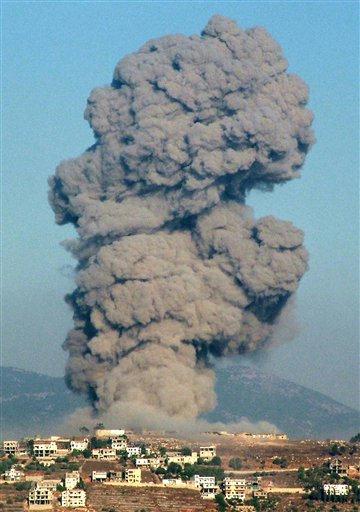
 Al-Hirmil District (Hermel)