Showing posts with label lebanon. Show all posts

January 8, 2009

Israel's Two-Front War?

Initial corporate media accounts are down-playing the significance of rockets fired from Lebanon as being isolated. But give Israel's gross violations of legal and ethical norms, an uncontrolled escalation is a risk.

Psssst... Do Something

Sources:

Reuters, Rockets from Lebanon hit Israel amid Gaza offensive, Haim Shafir, January 8, 2008.

gdaeman_scroll_small

December 27, 2007

Hurray! Cluster Bombs are OK

Whew! Thanks to Israel, we now know that the indescriminant use of cluster bombs, at the very end of a military confrontation that is being negotiated to end soon, is perfectly OK! ... and people wonder why some Palestinians are driven to acts of violence.

DemocracyNow! reports:

Israel Rules It Was OK To Use Cluster Bombs in Lebanon:

An Israeli military prosecutor has concluded that Israel’s use of cluster bombs during the 2006 Lebanon war was justified and did not violate any standards of international law. Lebanese officials accused the Israeli army of covering up war crimes. The United Nations and human rights groups say Israel dropped about 4 million cluster bomblets during the 34-day war.

More than 30 people have been killed by cluster bomb and land mine explosions in Lebanon since the 2006 summer war.


Some of us know that it's not OK. The military prosecutor fox has just said it's "OK" to eat the chickens in the hen house. Now ain't that Orwellian.

If that's hard to understand, a quick read of the following links on this subject will help clarify things.

Haaretz Article exposes Israeli Military.

US Prohibitions on Israeli Use of Cluster Bombs.

Lebanon Damage: Israel's Indiscriminant use of cluster munitions.

October 22, 2007

"US Countries" Around the World

How does Vice President Dick Cheney view the world? Cheney exposes his view during an announcement of US intentions to build several military bases in Lebanon:
The United States will work, with free Lebanon's other friends and allies to preserve Lebanon's hard won independence, and to defeat the forces of extremism and terror, that threaten not only that region, but U.S. countries across the wider region.

Emphasis added. Yes, in Cheney's view, forces of extremism and terror are threatening "US countries" in the Middle East.

Hear for yourself....


Cheney's "US Countries"

Sources:

Democracy Now, citing the al-Safir newspaper, Report: U.S. Wants to Build Military Bases in Lebanon
, October 22, 2007.

August 22, 2007

Prediction for Iraq

As we approach the September 2007 deadline for Bush's progress report, it is important to hear alternatives to the establishment voices. Journalist Nir Rosen speaks in confident and sober terms in his assessment and predictions about Iraq and the region. He was prompted by Amy Goodman of DemocracyNow!
AMY GOODMAN: What do you think has to happen?

NIR ROSEN: In Iraq? It’s too late for anything good to happen in Iraq, unfortunately. If the Americans stay, we’ll see a continuation of this civil war, of ethnic cleansing, until all of Iraq is sort of ethnically -- or sectarian, homogenous zones, which is basically what’s already happened. If the Americans leave, then you’ll see greater intervention of Saudi Arabia, Jordan, Syria, supporting their own militias in Iraq and being drawn into battle.

But no matter what, Iraq doesn’t exist anymore. Baghdad will never be in the hands of Sunnis again. Baghdad will be controlled by Shia militias. They’ve been cleansing all the Sunnis from Baghdad. So Sunnis are basically being pushed out of Iraq, period. They can go to the Anbar Province, which isn’t a very friendly place. I think you’ll see that there won’t be any more elections in Iraq. Maliki is the last prime minister Iraq will have for a long time. There is neither the infrastructure for elections anymore, nor the desire to have them, nor the ability of Iraqi groups to cooperate anymore. So what you’ll see is basically Mogadishu in Iraq: various warlords controlling small neighborhoods. And those who are by major resources, such as oil installations, obviously will be foreign-sponsored warlords who will be able to cut deals with us, the Chinese. But Iraq is destroyed, and I think we’ll see that this will spread throughout the region, and this will destabilize Syria, Lebanon and Jordan, as well.

Rosen has extensive experience with the Iraq refugee debacle. For more on that, see the full interview with Amy Goodman, referenced below.

Sources:

Nir Rosen is an independent journalist and the author of "In the Belly of the Green Bird: The Triumph of the Martyrs in Iraq." He is a fellow at the New America Foundation and has reported extensively from Iraq since the US-led invasion in 2003.

"Iraq Does Not Exist Anymore": Journalist Nir Rosen on How the U.S. Invasion of Iraq Has Led to Ethnic Cleansing, a Worsening Refugee Crisis and the Destabilization of the Middle East, DemocracyNow!, August 21, 2007.

May 26, 2007

Beautiful Lebanese Aqua River

A great place in lebanon near the village of Crimsonhair's dad.

Sources:

Crimsonhair
deviantART water

May 21, 2007

Think Thrice about Attacking Iran

Our foreign policy needs to be founded on basic principles. Do those principles include imperialism, in which we use aggressive force to exploit other people's natural resources?

If the answer is "no, we are not imperialists," then we need to get out of Iraq. That should be the moral compass upon which policy and actions are founded.

Unfortunately, Bush Inc. has created "facts on the ground," which are hard to ignore. The most challenging is Shia dominated political power in Iraq. If the US leaves Iraq, Iran will fill the vacuum. This is the real reason US is now unwilling to leave for Republican and Democrat alike. Even the Democrats never talk about 100% withdrawal, with the exception of presidential candidate Richardson who is defining this as an issue.

So, the US strategy options that are unfolding are 1) maintain a presence in Iraq for ever, or 2) attack and weaken Iran before leaving Iraq.

Last summer (2006) the US and Israel conducted a military experiment in Lebanon. They tried to route Hezbollah and failed. That should be a lesson about the risks of attacking Iran, who helped Hezbollah prepare for such an attack.

May 17, 2007

Living in a Mine Field

It's a sick joke I made up: Did you know Cambdia is the only country with a base-five counting system? 1, 2, 3, 4, 10, 11, 12, 13, 14, 20. It was developed because they can only count on one hand.

When I visited Cambodia I entered the famous Ankor Wat ruins, not from the front as 99.9% of people do, but rather from a side entrance through the woods. As a travel note, I recommend it. You have the place to yourself and, upon emerging from the woods and seeing the ruins, you feel as if you've discovered the temple for the first time.

Travel log aside, I know what it feels like to be in a mine infested country. Even in areas that have been "cleaned" you're forced to think, "maybe they missed one." I stayed on well worn trails... ususally.

Reuters reports that an estimated 400 million people live in mine infested areas. I'll skip the debate about mine ban treaties.

The Reuters article focused on cluster bombs. These are bombs or missiles that disperse large numbers of smaller bomblets over their target, which each explode independently destroying everything in a wide area. They are effective at destroying small things that are difficult to target, like an advancing group of soldiers that is spread out, or small missile or gun emplacements. However, by their nature, they cause a lot of collateral damage, and conventions preclude their use in populated areas. Worse is the fact that they leave behind unexploded bomblets, often found by curious children and farmers after the conflict has ended.

The Handicap International report, cited in the AP report, said that 98 percent of the casualties of the weapons were civilians "killed and injured while returning home in the aftermath of conflict or while going about their daily tasks to survive."

In 2006, Israel committed what history will record was one of the greatest war crimes involving cluster munitions. Haaretz reported:
"In Lebanon, we covered entire villages with cluster bombs, what we did there was crazy and monstrous," testifies a commander in the Israel Defense Forces' MLRS (Multiple Launch Rocket System) unit.

It's estimated that as many as a million unexploded cluster bomblets were left, and the truly criminal aspect is that Israel launched the vast majority in the final day or two when a negotiated settlement was imminent. It is viewed by many to have been yet another case of Israel's use of collective punishment via indiscriminate use of excessive force (a trifecta war crime). Many of the munitions were provided to Israel by the United States.

As noted above, there are prohibitions on the use of cluster munitions. Israel ignored them, and as a result, we have statements like the following being expressed in the aftermath of Israel's hammering of Lebanon in 2006:
The US Disaster Assistance Response Team Reports that the presence of unexploded ordinance continues to be the most significant security concern in the conflict-affected areas of Lebanon.
- US Government Situation Report, Lebanon, 9/5/06

The term "unexploded ordinance" is so common in these Lebanon situation reports that they have an acronym, UXO. The acronym is widely included comments like the following: Regarding Majdel Silim: "UXO scattered through the village," or "UXO prevents access to homes and agricultural lands", or in Borj Qalaouiye "UNHCR reports contamination by UXO," or in Marjaba village, "UXO significant problem," or Zaoutar Ghariya, Zaoutar Shargiya and Yahmour "90% of the land is inaccessible due to UXO," or in the Tyre District, villages of Deir Qanoun, Qana, Ramadya, Knisse, Henniyeh, Zibquin, Srifa, Maarake "UXO concerns."

And that laundry list is based on my incomplete work developing a Lebanon Village Damage Report.

Sources:

Reuters: 400 million people live in "minefields": report, Robert Evans Wed May 16, 2007.

United States Government Situation Report, Lebanon Humanitarian Emergency, USAID citing various sources, Index of reports by date.
Web LINK to Index of All Situation Reports

October 7, 2006

Lebanon: Village Damage by District

This page is work in progress...

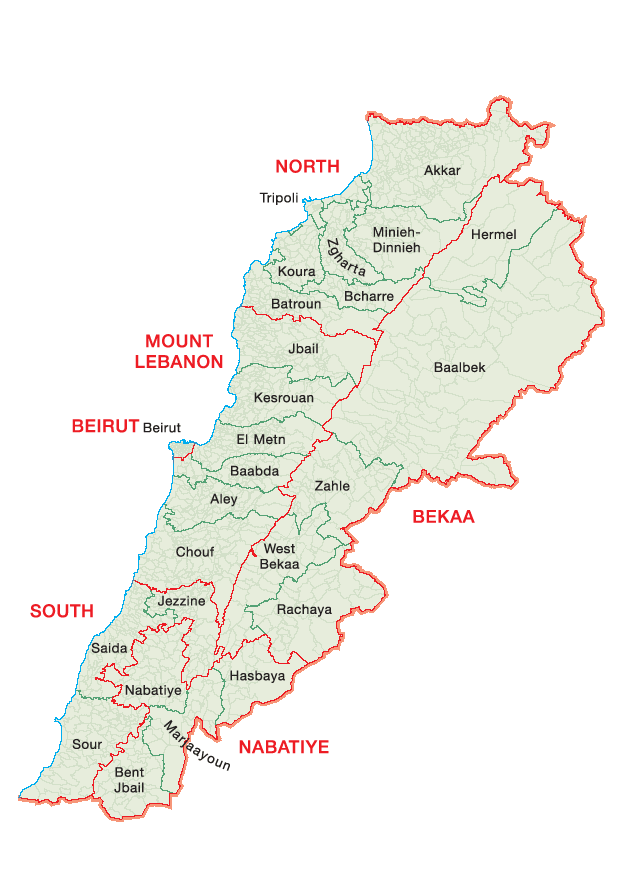
"Lebanon is divided into six governorates, which are further subdivided into 25 districts. The districts themselves are also divided into several municipalities, each enclosing a group of cities or villages." (Wikipedia) All the governorates and their respective districts are listed at the end of the report with a map.

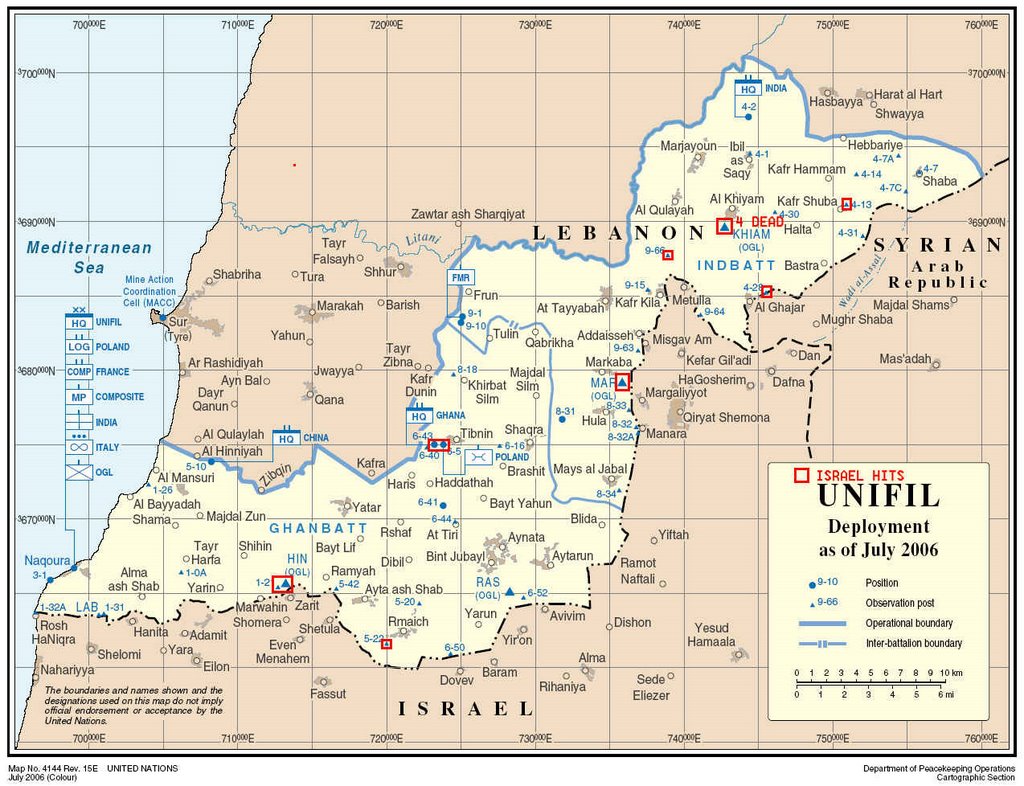
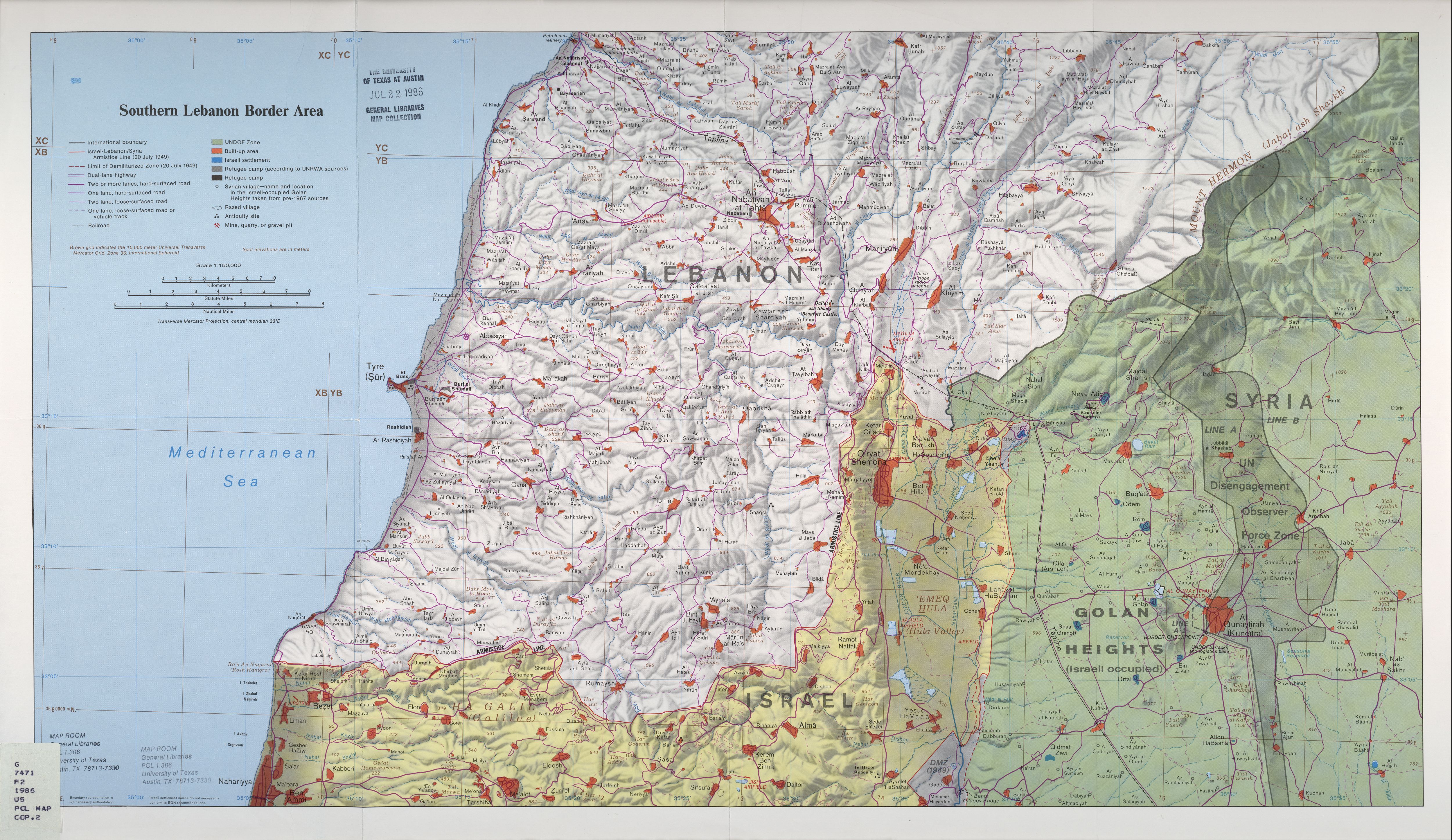
There are about 200 villages south of the Latani River (See Map of Southern Lebanon below, which includes Israeli attacks on UN compounds south of the Latani River).

The following is a summary of damage by governorate, district and village. The primary source is the USAID Lebanon Situation Reports (LSR), which often cite other sources. I've tried to provide report dates and Situation Report numbers.

Beirut Governorate

(There are no "districts" in Beirut. Only the city and neighorhoods).

HOUSING:
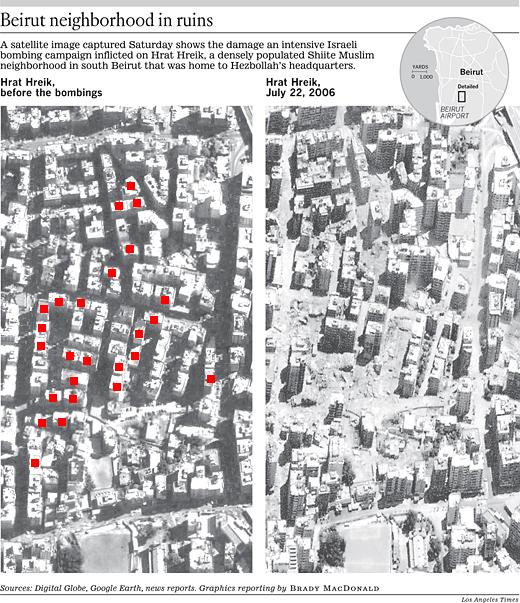
Of 120 damaged buildings surveyed that housed 2000 families, 40 need to be reconstructed. About 6,000 housing units were destroyed and 17,000 damaged. (Preliminary report. (LSR32 Sept. 1).

PUBLIC BUILDINGS:

UTILITIES:
Water and sewer piplines in major streets of Haret Hreik Municipality sustained significant damage (LSR38 Sept 12).

Nabatiyeh Governorate (Jabal Amel)

Al-Nabatiyé District

50 percent of all structures were destroyed in the villages of Yohmor and Western Zawtar. (LSR26, Aug. 23).

HOUSING:
Nabatiye Village: 50 percent of the homes destoryed, numerous unexploded ordinance remain.

PUBLIC BUILDINGS:

UTILITIES:
Drinking water sources and waste treatment capacity destroyed south of Nabatiye, Marjayoun including Qaliaiaa (often the collection and distribution pipeline systems are damaged). (LSR32 Sept. 1)
Water remains a concern: Villages of Zaoutar Ghariya, Zaoutar Shargiya and Yahmour. (LSR35 Sept. 6)

* Hasbyya

Marji'youn District

50 percent of all buildings destroyed in Markabe Village. (LSR24)

HOUSING:
Ghanduriyah village: 90 percent of the homes destroyed. (LSR30)
Houla village: 20 percent of the homes destroyed. (LSR20)
Markaba village: 50 percent of the homes destroyed. (LSR20)
Mays al Jabal village: 30 percent of the homes destroyed. (LSR20)
Qantarah (Cantarah): 50 percent of the homes destroyed. (LSR20)
Talusha village: 15 percent of the homes destroyed. (LSR20)
Tayyababh village: 80 percent of the homes destroyed. (LSR20)

PUBLIC BUILDINGS:

UTILITIES:
District affected by damage to three major pumping stations.
Khiam, water and sewer networks destroyed (LSR35 Sept. 6)
Marjaba village: Central water tank and pumps damaged, nonfunctinal.
Markaba and Taibe water needs remained as of Sept 8 (LSR38 Sept. 12)
Taibi, Adaisi, Deir Seryan, Kantara, Kfar Kila, Talousse, Rab Tlateen and Markaba, Mais Al Jabal, Blida and Houla water and waste piplines damaged (LSR32 Sept. 1)

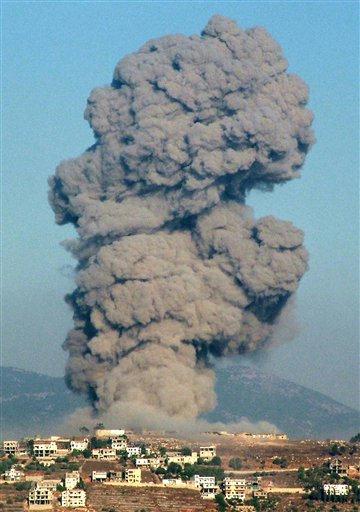
A large plume of smoke billows in the town of Khiam, in southern Lebanon, Tuesday, July 25, 2006, after Israeli air raids targeted it. For as sense of scale, note the size at the base of the plume, compared to the houses in front of the plume. An Israeli bombardment hit a UN observer post in the village of Khiam, killing four UN observers. (AP Photo/Lotfallah Daher).

Bint Jbeil District (Bent Jbail, Bint Jubayl)

HOUSING:
Ayta As Shaab: 70 percent of the homes and other properties were destroyed or badly damaged. (LSR24)
Bayt Leif: 30 percent of the homes destroyed (LSR21)
Bint Jbeil: 800 properties destroyed, 1,100 significantly damaged. (LSR36)
Borj Qalaouiye: 20 houses destroyed, 80 heavily damaged. (LSR38)
Kafra: 25 percent destroyed (LSR21)
Khiam village: 750 homes destroyed, 1,000 homes heavily damaged, 1,000 lightly damaged.
Majdel Silim: 200 homes destroyed, about 350 damaged out of 700. (LSR36)
Qabrikha: 100 homes destroyed, 75 damaged out of 480. (LSR36)
Soultaniye: Significant damage to houses. (LSR38)

PUBLIC BUILDINGS:
50 to 90 percent of the government and public buildings in 39 villages in the Bent Jbail district destroyed. (LSR 26 Aug. 29)

UTILITIES:
Affected by damage to three major pumping stations: Villages of Maroun er Ras, Aainata, Qabrikha and Kounine (LSR36 Sept 7)
Majdel Silim: Need water pumps (LSR36)
Soultaniye: Need for water tanks. (LSR38 Sept 12)

UXO:
Majdel Silim: UXO scattered through the village.

Beqaa Governorate (Bekaa)

Al-Hirmil District (Hermel)
Hermel village had the most significant structural damage in Bekaa.

HOUSING:

PUBLIC BUILDINGS:

UTILITIES:
North Bekaa water supply in need of urgent repairs.

Baalbeck District


HOUSING:
Baalbek: 2,000 homes destroyed. (LSR24)
Taibe: Significant damage to houses. (LSR38)

PUBLIC BUILDINGS:

UTILITIES:
North Bekaa: water supply in need of urgent repairs.
Taibe village: Need for water tanks (LSR38 Sept. 12)

South Governorate

(al-Janoub)
* Tyre (Sur, Sour)

HOMES:
Jabal al Butm village: 50 percent of the homes destroyed. (LSR21 Aug. 16)
Zibquin village: 60 percent destroyed. (LSR21 Aug. 16)

PUBLIC BUILDINGS:

UTILITIES:
Lack safe water and reliable power: Villages of Deir Qanoun, Qana, Ramadya, Knisse, Henniyeh, and Zibquin. (LSR35 Sept. 6)
Water and sanitation concerns: Villages of Srifa, Maarake (LSR37 Sept. 8)


Beirut Governorate

The Beirut Governorate is not divided into districts and is limited to the city of Beirut.

Nabatiyeh Governorate (Jabal Amel) - 4 districts

* Al-Nabatiyé
* Hasbyya
* Marji'youn
* Bint Jbeil

Beqaa Governorate - 5 districts

* Al-Hirmil (Hermel)
* Baalbeck
* Zahlé
* Western Beqaa (al-Beqaa al-Gharbi)
* Rashyya

North Governorate (al-Shamal) - 7 districts

* Akar
* Tripoli
* Zgharta
* Bshirri
* Batroun
* Koura
* Miniyeh-Danniyeh

Mount Lebanon Governorate (Jabal Lubnan) - 6 districts

* Jbeil
* Kisirwan
* Al-Matn
* Ba'abda
* Alay
* Al-Shouf

South Governorate (al-Janoub) - 3 districts

* Saida
* Tyre (Sur)
* Jezzine

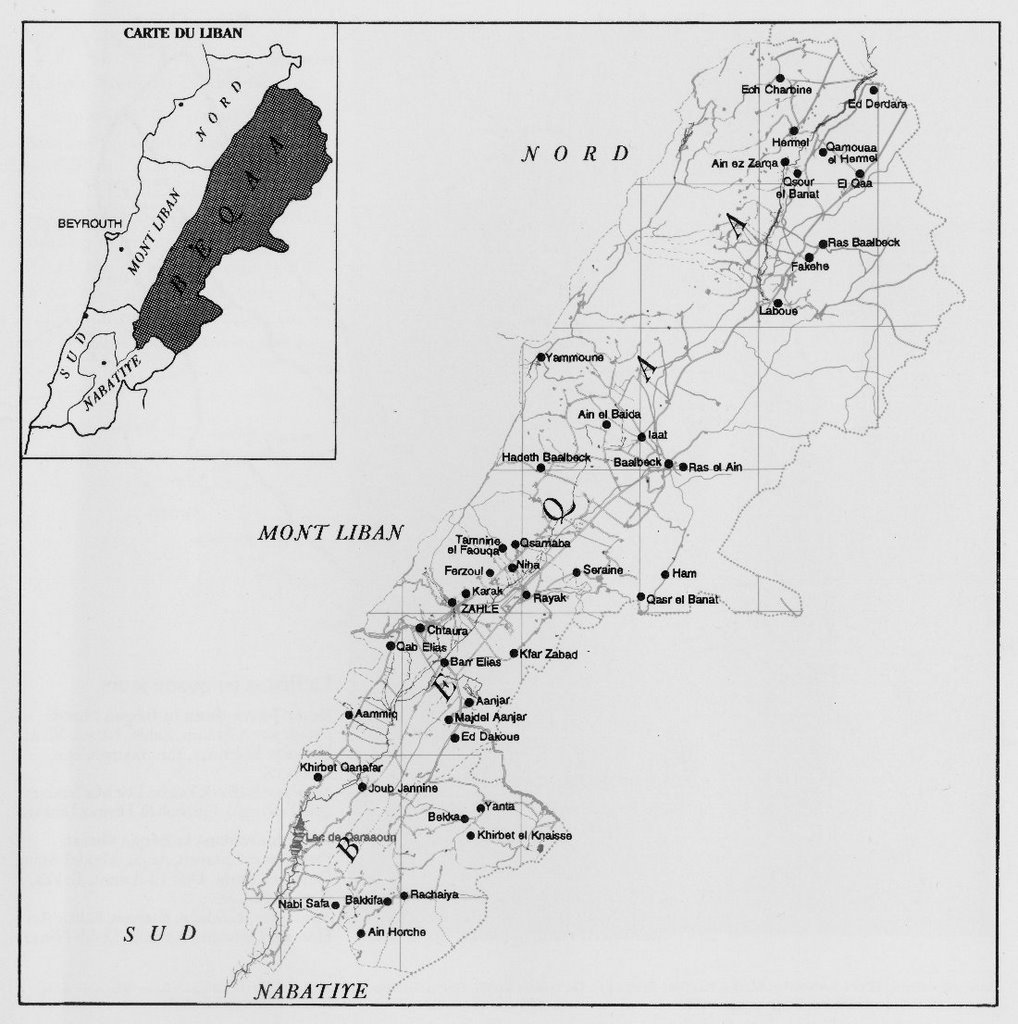
CLICK for Detailed Map of Southern Lebanon boarder area - 1986

Lebanon Village Districts, below


Source: USAID Disaster Assistance daily situation reports, which often cite other sources, like the Lebanese government and the United Nations.


Click for painting, "Lebanon Village 2006"

September 2, 2006

Lebanon Damage: Indiscriminant Cluster Bombs

Updated August 28, 2008

The US Disaster Assistance Response Team Reports that the
presense of unexploded ordinance continues to be the most
significant security concern in the conflict-affected areas
of Lebanon.

- US Government Situation Report, Lebanon, 9/5/06 [6].

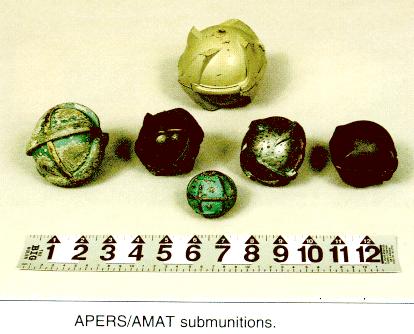
The US/Israeli assault on Lebanon in July/August 2006 inflicted awsome damage See: Lebanon Damage Report 2006. A special concern was Israel's use of cluster bombs, which are bombs, missles or artillary shells filled with many smaller bomblets (submunitions). The small bomblets are dispersed over a wide area before they explode individually.

Photo source and narrative [1]

Cluster bombs are indiscriminant in two regards. First, they spread over large areas (multiple football fields) killikng or maiming anyone in that area, including civilians. Second, a percentage of the small bomblets do not initially explode, remaining live to explode later when disturbed by farmers or curious children.

For these reasons the US has placed prohibitions on Israel's use of US-made cluster bombs. In addition to these prohibitions, there are international prohibitions.[3]

Update: On January 29, 2007 the US State Department issued a statement indicating it was likely that Israel had violated US arms export agreements in its use of cluster munitions in Lebanon the summer of 2006.

Between the August 12 cease fire in Lebanon and September 9, the United Nations reports 14 civilians have been killed and 66 people injured by cluster bomblets.[2] For example, in the village of Aitta Shaab near the Israeli boarder three children, Sukna, Hassan and Merwa, aged 10 to 12, paused before a curious object. Sukna picked it up. The terrifying blast flung her to the ground, thrusting metal shards into her liver. Hassan's abdomen was cut open. Merwa was hit in the leg and arm. "We thought it was just a little ball," said Hassan with a hoarse whisper in the intensive care ward at Tyre's Jabal Amel hospital. [4]

Update, August 28, 2008: Since the war ended, twenty-seven civilians and thirteen bomb disposal experts have been killed. Over 200 civilians have also been injured by the unexploded ordnance. [9]

Israel faces numerous charges of war crimes. One centers on their indiscriminant use of cluster bombs.

UN Relief Coordinator Jan Egeland said, "What's shocking, and I would say to me completely immoral, is that 90 per cent of [Israel's] cluster bomb strikes occurred in the last 72 hours of the conflict, when we knew there would be a resolution." Egeland notes the cluster bombs have affected large residential and farming areas and could be on the ground for years. "Colleagues in the UN Mine Action Co-Ordination Centre have undertaken assessments of nearly 85 per cent of bombed areas in South Lebanon have identified 359 separate cluster bomb strike locations that are contaminated with as many as 100,000 unexploded bomblets." [5] This figure has now risen to at least 450 sites.[2]

A UN report said American cluster munitions found included 559 M-42’s, an anti-personnel bomblet used in 105-millimeter artillery shells; 663 M-77’s, a submunition found in M-26 rockets See description; and 5 BLU-63’s, a bomblet found in the CBU-26 cluster bomb. Also found were 608 M-85’s, an Israeli-made submunition.

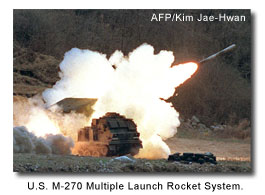
Haaretz reported that an IDF commander in the unit responsible for multiple launch rocket systems (MLRS), like that in the photo to the right, said his battalion commander estimated the IDF fired some 1,800 cluster rockets on Lebanon during the war and they contained over 1.2 million cluster bomblets. The IDF also used cluster shells fired by 155 mm artillery cannons, so the number of cluster bombs fired on Lebanon is even higher.

The Haaretz article continues, "the United Nations' land mine removal team in Lebanon claims that the percentage of duds among the rockets fired by the IDF reaches some 40 percent. In light of these figures, the number of duds left behind by the Israeli cluster rockets in Lebanon is likely to reach half a million." This is consistent with reports by IDF reservists who report some of the missles were fired at ranges closer than specified by manufacturer guidlines, which leads to more unexploded bomblets. [7]

The MRLS commander said, "In Lebanon, we covered entire villages with cluster bombs, what we did there was crazy and monstrous." [7]

As of October 27, 2006, nearly $6 million in US tax-payer dollars have been spent on demining and clearing of unexploded ordinance in Lebanon. [8]

Sources:

[1] Federation of American Scientists Web LINK

[2] United States Government Situation Report, Lebanon Humanitarian Emergency, USAID citing various sources, September 1, 2006.

[3] 1977 Additional Protocol I to the 1949 Geneva Conventions, which states: “Parties to the conflict shall at all times distinguish between the civilian population and combatants and between civilian objects and military objectives and accordingly shall direct their operations only against military objectives.” Although Israel is not a signatory to this protocol, the protocol is considered "customary international law" that applies to all nations. See Indiscriminant Attack

[4] Declan Walsh, August 22, 2006.
Web LINK

[5] UPI, Heather Murray, August 30, 2006 Web LINK

[6]United States Government Situation Report, Lebanon Humanitarian Emergency, USAID citing various source, Index of reports by date.Web LINK

[7] Haazretz Article published on about September 11, 2006.
Web LINK

[8] USAID Lebanon Situation Report, October 27, 2006. Web LINK

[9] DemocracyNow! Headlines, "Shortage of Funding Halts Mine Sweeping in Lebanon"
August, 25, 2008.

See Also

New York Times, David Cloud, August 26, 2006. Web LINK

DemocracyNow!, Ana Nogueira, August 23, 2006. Web LINK

DemocracyNow!, August 25, 2006. Web LINK

DemocracyNow!, August 30, 2006. Web LINK

DemocracyNow!, August 28, 2008. "Shortage of Funding Halts Mine Sweeping in Lebanon"

August 29, 2006

Bush Leading the Nation into Another Trap: Iran

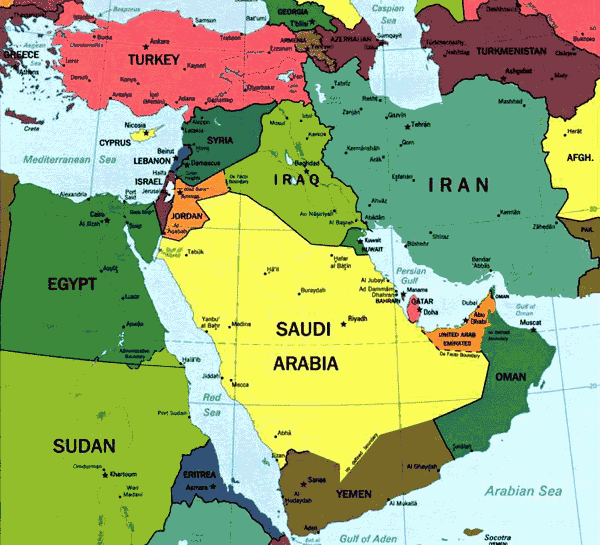
A picture is worth... a hell of a lot when you're contemplating a war-of-choice on Iran. See how big Iran is compared to Iraq, where Stratfor's George Friedman has proclaimed that the US military has lost the war? Web LINK

See tiny Lebanon, where Israel used Covert Commandos, a Navel Blockade, surgical airstrikes consisting of about 7,000 bombs, and boots on the ground? Israel failed, but not after sullying its reputation by managing to kill civilians at a ratio of about 75% with a child-kill ratio of about 33%. Israel has also placed itself at risk of war crimes and having to pay to rebuild the infrastructure of Lebanon. See: Hezbollah Clearly the Winner.


Read FauxNews' military experts and you would think that using a couple of the available military option on Iran is a good idea. Fox: Military Options The options sound familiar: Use Covert Commandos, a Naval Blockade, surgical strikes. Even the FauxNews military experts shy away from the "boots-on-the-ground" option, because, "The U.S. military is already stretched thin with its commitments in Afghanistan and Iraq."

In other words, the FauxNews proposal is to attack Iran using at most three of the four options used unsuccessfully by Israel in teeny weeny Lebanon, against an irregular militia of 2,500.

Remember during the first 2004 debate, Bush admitted we fell into a trap, "we thought we'd whip more of them going in. But because Tommy Franks did such a great job in planning the operation, we moved rapidly, and a lot of the Baathists and Saddam loyalists laid down their arms and disappeared. I thought they would stay and fight, but they didn't. And now we're fighting them now. And it's hard work."

Bush led the Nation into a trap in Iraq. Look at the map, and the size of Iran. Bush and FauxNews are leading the Nation into another trap in Iran.

August 12, 2006

Lebanon Damage: Roads and Bridges

This assessment builds upon the Lebanon Damage Report 2006

Updated August 20, 2006.

Roads vs Bridges:

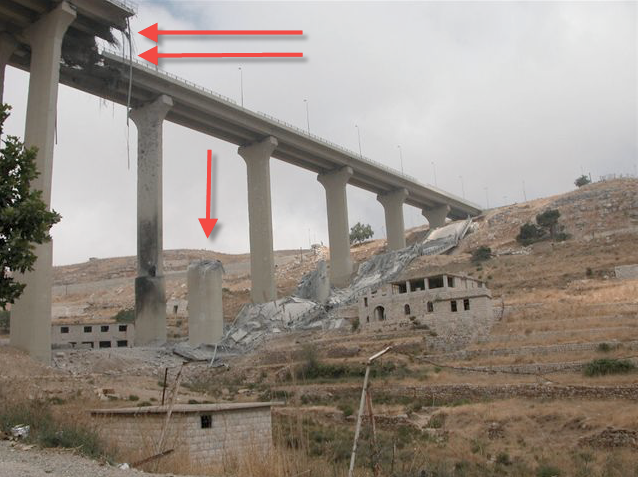
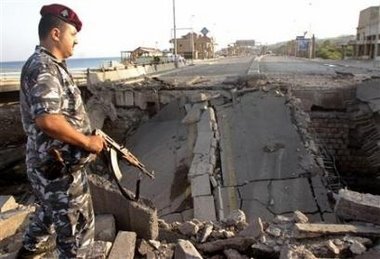
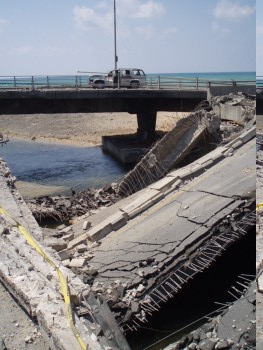
The destruction of roads and bridges to cutoff tranportation routes is the primary focus of this report. In this sense, road and bridge bombings are similar, except that the difficulty and cost of re-building bridges is often much greater.

Targeting Vehicles vs Targeting Roads:

Israel has targeted numerous vehicles on roads, which is different than targeting the road itself to cut off transportation routes. This report focuses on the later. A separate report is being developed on the topic of targetting civilian vehicles.

Israeli Rationale:

In the initial hours of Israel's assault on Lebanon, they claimed bridges were being destroyed to prevent Hezbullah from transporting the captured soldiers. Over time, this rational changed to preventing Hezbullah movement in general and to prevent the resupply of Hezbullah forces.

However, Isreali statements, and the facts on the ground, indicate that Israel had deeper motives. For example, Israel said it held the Lebanese government responsible for the soldier's kidnapping. In this context, the damage inflicted on Lebanon's infrastructure seems intended to pressure the Lebanese government and pupulace to turn against Hezbullah. This psychological warefare strategy is well documented throught history, including US bombing of civilians in Germany and Japan during World War II. In the present case, Israel's strategy appears to have backfired, and leaves Israel vulnerable to legitimate charges of war crimes (collective punishment, disproportionate use of force, and failing to distinguish between military targets and civilian population.

Report Methodology:


Road and bridge bombings are very common. Repairs and re-bombings make it difficult to provide numbers of disabled roads. This damage report is not intended to be perfect, but rather attempts provide a reasonable, well-sourced estimate of the damage.

Summary of Damage to Roads and Bridges:


94 roads as of August 11 [1].
71 bridges have been destroyed [2][3][1][32]
72 overpasses have been destroyed [2]

Detailed Cases


Initial Week, July 12 - 18:

In the first week of the US-Israeli assault, 38 main roads were cut off, and 48 bridges were destroyed [4]

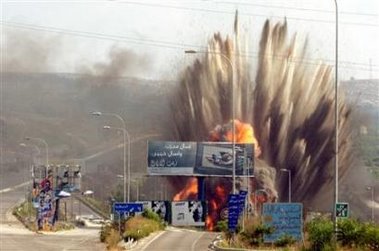
July 13, In the initial assault, the Israeli military said it attacked 40 targets to stop Hezbollah from moving their two soldiers. One strike by Israeli jets hit a major junction along the main north-south coastal highway, wrecking the road and wounding two people. [5]

July 14, Israeli planes struck the main highway linking Beirut to the Syrian capital Damascus, a Lebanese security source said. The jets struck at least five separate times along different points of the international route.[6]

July 14, A woman was killed and six other civilians, including three paramedics, wounded in a strike on a bridge over the river Zahrani near the main coastal city of Sidon. [8]

July 15, Security officials said three other civilians were killed in an air raid on a bridge on the Beirut-Damascus highway. [7]

July 15, Israeli planes fired rockets near a Lebanese-Syrian border crossing, heightening fears it could extend its campaign to Syria. [9]

July 17, Nine civilians were killed, including two children, when an afternoon strike hit a bridge at the entrance to the southern port city of Sidon (Saida), Lebanese security officials said. [30] This is consistent with a reporst circulating the internet referencing an attack on the Rmayleih bridge, near Saida (Sidon) on July 15 or July 17 (might be an error in the label of a photo) killing 8 civilians. The reports are submitted by, "Hanady," who reference a Dr. Bashir Sham, member of "French Association of Cardiovascular Surgeons" at the "Southern Medical Center," who describes the unusual condition of the corpses. The conditions were characterized as follows: they were burnt , but their colour is dark , they're inflated, and they have a terrible smell" All this , and the hair is not burnt nor do the bodies bleed. (Similar reports in Doueir).

July 16, Another seven people were killed in other raids against bridges and petrol stations in eastern and southern Lebanon, including a strike that blocked the main border crossing into Syria [?]

Continued Attacks on Roads & Bridges:


July 19, Two civilians were killed and two wounded in air strikes on roads in Kfarshuba, Bazuriyeh and the nearby entrance of Tyre. [11]

July 20, The BBC reported, "Bombed roads are hampering aid efforts, with the UN warning the humanitarian crisis is worsening by the hour." The United Nations' emergency relief co-ordinator, Jan Egeland, said the wounded could not be helped because roads and bridges had been cut by Israeli air strikes. [10]

July 21 A section of Lebanon's oldest bridge, which is part of the Beirut-Damascus highway in central Lebanon, collapsed after being hit with four Israeli missiles. [12]

July 22, Israel said its aircraft had hit 150 targets inside Lebanon in the 24 hours to Saturday morning, including a dozen roads linking Lebanon to neighbouring Syria. [13]

July 24, UN relief chief Jan Egeland said, "Hundreds of bridges and virtually all road networks have been systematically destroyed leaving entire communities in the south inaccessible." [14]

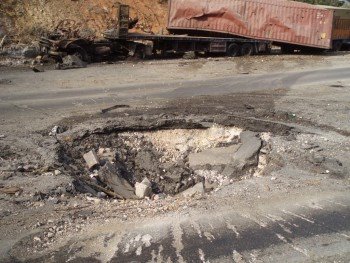
July 29, Lebanon's main international border crossing was closed on Sunday, July 30, a day after Israeli warplanes struck the road leading to Syria. Heavy bombs had gouged out large craters on the road leading to the Syrian border at Masnaa in eastern Lebanon, witnesses said. The closure left one route through northern Lebanon to Syria as the only relatively safe passage out of the country. [15]

July 31, Israeli warplanes launched raids on eastern Lebanon on Monday, Lebanese security sources said, hours after Isreel claimed to suspended aerial bombardment of south Lebanon for 48 hours. The sources said at least two air strikes hit roads near the border with Syria in the early hours. [16]

August 2, Israeli aircraft wrecked at least three bridges in the northern tip of the Bekaa and in northern Lebanon. [17]

August 4, Israel again cut off all roads into Beirut including the north-south coastal highway. [18] Israeli air strikes destroyed four bridges north of Beirut on the main coastal highway. The bombing of bridges in the Christian heartlands north of Beirut cut off the main coastal highway to Syria. A bridge in the Maameltein area near Jounieh was destroyed. Five people, including a Lebanese army soldier, were killed and 12 wounded in the bombing of the bridges, the Red Cross said. [19][20]
Video Report LINK

Also of concern is the fact that the Qasmieh Bridge and the makeshift bridge between Saida and Tyre in the south were destroyed a few days ago, leading to the isolation of the city of Tyre. [21]

August 6, Israeli warplanes early Sunday carried out a series of air raids bombing two roads linking Lebanon's eastern Bekaa plain with Beirut and north Lebanon, as well as two bridges in Akkar province north of the capital, Lebanese police said. [22] In Beirut, on Sunday afternoon (Aug 6), warplanes dropped six bombs on the sector, destroying a 10-storey building and cutting the main road that crosses the suburb. [23]

August 7, Israeli warplanes early Monday carried out a dozen raids in east Lebanon, hitting roads linking the region with Syria, Lebanese police said without reporting any victims. Two raids targeted the road leading to the Masnaa border post, knocked out by previous attacks and hit again each time residents fill in the craters so as to be able to drive around, the police said. The fighter-bombers pounded the road between Baalbek and Rayak, linking the Baalbek region with Zahle in the centre of Lebanon, they said. Two other raids hit the Aita al-Fukhar road linking villages in the Bekaa Valley with Syria. [24]

August 10, Israel struck the border crossing at Masnaa in the Bekaa Valley. Masnaa is the main border crossing with Syria used by evacuating foreigners, and has been closed after four previous strikes. Israeli warplanes struck roads and villages in mountainous areas in the southeastern part of the Bekaa Valley. [25]

August 11, Isralie jets struck twice at a busy bridge at the Abboudiyeh border crossing into Syria, killing at least 12 people and wounding 18 others, hospital and security officials said. [26]

August 12, An Israeli air strike destroyed a road leading to the only remaining border crossing to Syria at Arida about a mile from the Mediterranean coast. It's the last official border post open for humanitarian convoys and civilians fleeing the country. A separate raid destroyed a bridge linking Tyre and Nabatiyeh with Sidon. [27][28]

August 13, Israeli fighter-bombers destroyed two bridges in the northern Akkar plains that link Tripoli with the Syrian border, wounding six people. The air strike on the bridge at Halba destroyed a large number of homes, causing civilian casualties, said a hospital worker. A number of Lebanese Army soldiers stationed nearby were also wounded in the attacks. The bridge in adjoining village was also destroyed. Eight other bridges in the area have already been destroyed. [29]

August 15, Tens of thousands of Lebanese jammed bomb-cratered roads Monday as they returned to still-smoldering scenes of destruction after a tenuous cease-fire ended 34 days of vicious combat between Israel and Hezbollah. [31]

August 19, Israel raid after the cease fire: The security officials said the commandos flew in by helicopter to a hill outside the village of Boudai west of Baalbek in eastern Lebanon, about 17 miles from the Syrian border. Witnesses said Israeli missiles destroyed a bridge during the fighting. [32]

Images:


LINK to IDF video of bridge being destroyed

Video Report of 4 Bridges destroyed August 4, 2006


Bridge at Damour


Bridge at Al Owali, Sidon (Saida)

Photos from Dar Jamail


SEE Dar Jamail's Photo Album for More


Sources:


[1] Lebanese Government via map made available from www.lebanonmaps.org.

[2] BBC, "Lebanon Damage Report"
Web Link

[3] Reuters, Lin Noueihed, August 4, 2006
Web LINK

[4] Wikipedia referencing the Financial Times, July 19, 2006.
Web LINK

[5] The Sun UK
Web LINK

[6] YnetNews, July 14, 2006
Web LINK

[7] Naharnet News Desk, July 15, 2006.
Web LINK

[8] Beirut, July 14, 2006 AFP
Web LINK

[9] Reuters, July 15, 2006
Web LINK

[10] BBC, July 20, 2006
Web LINK

[11] Beirut, July 19, 2006 AFP
Web LINK

[12] Canadian Broadcast Corporation, July 21, 2006
Web LINK

[13] AFP, Beirut, July 22, 2006
Web LINK

[14] AFP, Beirut, July 24, 2006
Web LINK

[15] AFP, MASNAA, Lebanon, July 30, 2006
Web LINK

[16] Reuters, Beirut, July 31, 2006
Web LINK

[17] Reuters, August 2, 2006
Web LINK

[18] CNN, August 4, 2006
Web LINK

[19] Reuters, August 4, 2006
Web LINK

[20] Reuters, Lin Noueihed, August 4, 2006
Web LINK

[21] Action by Churches Together (ACT) - Switzerland
Elisabeth Gouel, August 6, 2006.
Web LINK

[22] Beirut, Lebanon Aug 7, (AFP)
Web LINK

[23] BAALBEK, Lebanon, Aug 6 (AFP)
Web LINK

[24] BAALBEK, Lebanon, Aug 7 (AFP)
Web LINK

[25] Associated Press, CHRISTOPHER TORCHIA, August 11, 2006
Web LINK

[26] August 11, 2006 (AFP)
Web LINK

[27] Beirut, Aug 12, 2006 (AFP)
Web LINK

[28] Associated Press, ZEINA KARAM, August 12, 2006.
Web LINK

[29] SIDON, Lebanon, Aug 13 (AFP)
Web LINK

[30] Associated Press, Ravi Nessman July 17, 2006.
Web LINK

[31] Associated Press, Steven R. Hurst, AP August 15, 2006
Web LINK

[32] Associated Press, SAM F. GHATTAS, August 20, 2006.
Web LINK

July 23, 2006

Lebanon Damage Report 2006

Updated August 28, 2008

Expanded Reports: To minimize clutter on this page I've expanded several subject areas, listed and linked immediately below.

Damage to Villages by District (a work-in-progress)

Damage to Roads and Bridges

Impacts of Cluster Munitions (Includes a link to US Prohibitions on Israeli use of cluster munitions).

See Location Map of Lebanon below

The Number of Attacks:

Citing a variety of sources, the Amnesty International reports Israel’s air force carried out more than 7,000 air attacks, while the navy had fired 2,500 shells (known to be very inaccurate). (This does not count artillary, mortars, tank shells, grenades, and other munitions). [57]

Killed:

At least 1,191 Lebanese were killed, most are civilians, about a third were children according to the Lebanese government. More continue to die due to encounters with unexploded munitions. [57][39][66 10-27-06 Report] See "Special Concerns" and footnote [6] for specific cases.

Wounded:

4,409 civilians wounded, according to the Lebanese government. More continue to die due to encounters with unexploded munitions. [57][39][66 10-27-06 Report]

Displaced:

About 970,000 Lebanese fled their homes in the fighting, about one-quarter of the population.[57] About 200,000 remained displaced as of October 27, 2006[66].

Special Concerns:

Seige of an Entire Country: By cutting off all modes of transport into Lebanon, and thus life-supporting supplies, Israel is establishing a seige, which is a form of collective punishment. [45] The blockade continues after the cessation of major hostilities.

Phosphorus Weapons: On Saturday July 15, in their attack on villages in the Arqoub area in the South, Israel made use of phosphorus weapons. [9][15] (July 18, 24)

Cluster Bombs: Between the August 12 cease fire, and Sept. 9 the United Nations (UNICEF) reports that 14 civilians have been killed by unexploded ordinance (UXO), and 66 have been injured.[66] As of Sept. 9, 2006 the UN Mine Action Coordination Center had identified 450 cluster bomb sites. Nearly 15,000 unexploded bomblets had been destroyed. Some villages report being 90% inaccessible due to contamination with UXO. [66] As of December 29, 2006 the UN had received reports of at least 200 UXO incidents. [66] SEE Expanded Report

Update, August, 2008: Since the war ended, twenty-seven civilians and thirteen bomb disposal experts have been killed. Over 200 civilians have also been injured by the unexploded ordnance.

New Land Mines Laid by Israel:
The United Nations has reported that four deminers, two British and a Bosnian were seriously wounded, and a Lebanese expert slightly hurt, at the weekend when they stepped on mines. The incidents near the village of Deir Mimas were the "first evidence we have that the Israeli forces laid new mines in south Lebanon in 2006."

Attacks on relief and medical operations: “The International Committee of the Red Cross (ICRC) yesterday reiterated its 13 July appeal to both parties involved in the conflict in Lebanon to “respect humanitarian volunteers and workers and the Red Cross and Red Crescent symbols. This call follows an attack on Tuesday by the Israel Defense Forces (IDF) on a convoy of ambulances and trucks, sent by the United Arab Emirates Red Crescent (UAERC), on the road between Damascus and Beirut.” [10]

Attacks on Fleeing Refugees: Israel urges civilians to leave an area, but maintained a conflicting policy of attacking all moving vehicles. See: "Civilian Vehicles and Convoys" below. Also see notes [6]

UN Observer Post Attack July 26: The observer post has been manned by the UN for many years and is well marked. Israel shelled the post for several hours and is reported to have finally used targeted munitions. Israel commanders received direct communications from the observer post at least 10 times over several hours urging the shelling to stop. The UN Secretary General is on record indicating his belief that the attack was deliberate.

Qana Apartment Attack, July 30: 1am sustained attack killed up to 54 civilians, Lebanese officials say. Human Rights Watch says it has confirmed 28 dead in that attack and 13 people missing. [36]

Qaa Orchard Attack, August 4: Israeli air strike hit a farm near Qaa, close to the Syrian border in the Bekaa Valley where orchard workers, mostly Syrian Kurds, were taking lunch. 33 people were killed and 20 wounded. 23 of the killed were Syrian including 6 women. [36] ([42] updated after some died of their wounds).

Civilian Infrastructure:


“The top U.N. humanitarian official, touring Beirut, said billions of dollars will be needed to repair damage” [5] (July 23)

Homes & Residential Buildings:More than 130,000 private homes damaged or destroyed according to the Lebanese government. [64]

Roads & Bridges: Road & bridge bombings are very common, followed by repairs and re-bombings, making it difficult to inventory. A summary with a link to a more detailed assessment (See Also "Civilian Vehicles and Convoys").

More than 94 roads as of August 11 [48]. 38 main roads cut off within first week of the conflict.[2]
71 bridges have been destroyed [27][36][48][56]
72 overpasses [27]

SEE More Detailed Report & Images

Airports:
Beirut International Airport, runways, fuel depot (at least 4 separate strikes), radars, parking lot, access tunnel, two access bridges [2][12][8][28]
Qaleiat Airport in North Lebanon, runways [2][27]

“In an unusual deal that the United States helped broker, a runway at the Beirut airport was repaired long enough to enable six planes -- one carrying former Lebanese Prime Minister Najib Nakati -- to take off. Israeli forces soon after bombed the runway again.” [12] (July 15)

Ports:

The three main sea ports of Beirut, Tripoli and Jamil Gemayel, severly damaged [2] (July 18)

Utilities:
Widespread electricity outages across Southern Lebanon have disabled water pumps resulting in significant health risks.
Water-processing plant in Yurin
Fuel storage tank at the Jiyeh power plant, Beirut [11] (July 14)
Jiyeh power plant itself, Beirut [13] (July 16)
Zahrani power plant south of Beirut [12] (July 15)
Electricity generator in Sibline has been damaged [28] (July 21)
11 Reservoir dams were destroyed and 20 damaged [27][66 Sept. 12 report]
Sewage plant, Dair al-Zahrani [27]
6,800 water storage tanks destroyed in 40 villages in Majayoun and Bent Jbail districts affecting 45,000 people. [66 10-27-06 report]

August 11, Electricity was out in Tyre and Sidon, after Israeli warplanes struck transformers at power plants in both coastal cities. An official said it could be 10 days before power was restored [50]

Food Storage Facilities and Supermarkets:
Grain silo in Beirut Port [9] July 18
Detergent and foodstuffs warehouse for Procter & Gamble, Choueifat [28] (July 21)
Supermarkets in many villages were targeted, suggesting Israel's intent to drive civilians out of villages by destroying their food source [65]

Communications:
Antenna in Tripoli port belonging to the maritime operations room [2] (July 18)
Antenna owned by MTC mobile phone company in Dahr al-Baidar. [2] (July 18)
Lighthouse in Beirut near American University hit at least twice. [16][46] (7/15, 8/9)
Television transmitters at Terbol, north of Beirut, for Lebanese Broadcasting Company, and Future TV. [25] (July 22)
Cell Phone transmitters at Terbol, north of Beirut. [26] (July 26)

Commercial:
Textile factory in the border town of al-Manara [5] July 23
Factory producing prefabricated houses near the highway to Damascus [5] July 23
The country's largest dairy farm, Liban Lait [8] July 19
Paper mill [8] (July 19)
Packaging firm and [8] (July 19)
Pharmaceutical plant almost completely destroyed [8] (July 19)
Plastics factory in Tyre almost completely destroyed [8] (July 19)
Two plastics factories in the South and one in the Bekaa extensive damage [8] (July 19)
Tissue paper factory in Sidon almost completely destroyed [8][28] (July 19)
Tissue paper factory in Bekka [27]
Bottle factory in Bekka [17]
Medical supply company in Beirut's southern suburbs (might be same as Pharmaceutical plant)
Warehouse $10 million in consumer merchandise, Rafik Hariri International Airport [8] (July 19)
Warplanes struck a large construction materials factory south of Baalbek. [38]
About 150 businesses reported by the BBC [27]
See Gas Stations

Public Buildings:
Of 400 health facilities surveyed by the World Health Organization, 12 were totally damaged, 38 severly damaged with the most damage in Bent Jbail, followed by Marjayoun, Nabatiye, and the southern suburbs of Beirut. [66] Sept. 6

According to the UN Office for the Coordination of Humanitarian Affairs (OCHA), the conflict destroyed 50 to 90 percent of the government and public buildings in 39 villages in the Bent Jbail district. [66] Aug. 23, Report 26

Hospital destroyed, Mayss al-Jabal [2][28] (July 18)
Hospital hit, Nabatiyeh [28]
Hospital hit, southern suburbs of Beirut [28]
Air strikes destroyed the three-storey Dar al-Hikmah hospital in Baalbek [59][60] (Aug 2)
Several schools in Kounin destroyed [2] (July 18)
School for the deaf "leveled" [43] (Likely the Al-Hadi Institution for the blind and deaf in Ghobeiry, Beirut).

"Up to 50 schools in south Lebanon were completely destroyed as a result of the conflict. In addition there are as many as 300 other schools which suffered major damage," Simon Ingram, spokesman for UNICEF. [61]

According to the UN Office for the Coordination of Humanitarian Affairs (OCHA), the conflict destroyed 50 to 90 percent of the government and public buildings in 39 villages in the Bent Jbail district. (See August 23 United States Government Situation Report ref [66]).

Civilian Vehicles & Convoys:

There have been numerous reports. A few examples follow.

Israel hit a convoy of refugees, Associated Press reports on July 23. [14]
An Israeli missile also hit two [clearly marked] Red Cross ambulances late Sunday in the southern Lebanese town of Qana, killing one person and seriously wounding two others, a Red Cross official said. [15] (July 24)

Israeli missiles hit a convoy near the town of. Three trucks, clearly marked as a relief operation, containing supplies of medicines, vegetable oil, sugar and rice were damaged or destroyed, as well as four passenger vehicles. [28]

Two trucks with water drilling equipment destroyed in Ashrafiyeh, Beirut. [28]

The bodies of nine Lebanese civilians, including three children and their parents in a car hit by a missle, were found along Maarub-Dardghia road near Tyre July 28. [29]

Religious Buildings:
Church in Rmeish severely damaged [2] (July 18)
Mosque in Tiri severely damaged [2] (July 18)
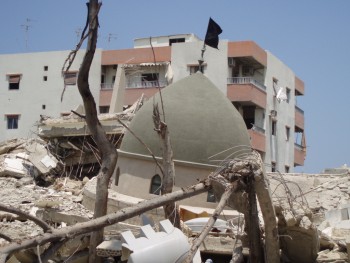
Mosque in Sidon destroyed (photo: Dahr Jamail)[51]

Gas Stations & Fuel Centers:
Fuel containers in Jiyye destroyed [2] (July 18)
Fuel depot at Beruit International Airport [8] (July 22)
Gas storage tank in the northern neighborhood of Dawra [19] (July 17)
12 service stations destroyed as of July 18 [4]
17 fuel stores reported as of July 21 [28]
4 gas stores reported as of July 21 [28]
Two petrol stations in Baalebeck were targeted and set on fire [34] Aug 1

Environmental:

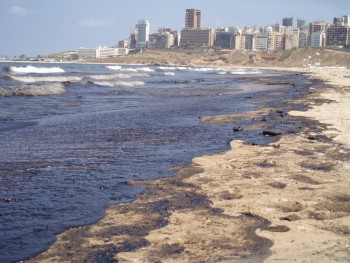
An oil slick caused by Israeli bombing of the Jiyyeh power station now covers 80km (50 miles) of coast. [33]See: United Nations Environmental Program (photo: Dahr Jamail)

Lebanese Military: (Not of Hizbullah)
Lebanese Army posts struck in Jounieh, Amsheet, Sidon, Batroun and Abdeh.
A Lebanese soldier was killed in another strike on an army post south of Beirut [41]
Military vehicles struck in Haret Hreik.
Israeli jets struck several radar targets in Lebanon over the weekend. [18] (July 17)
Eight Lebanese soldiers were killed when Israeli aircraft attacked a small fishing port at Abdeh in northern Lebanon near a highway leading to Syria. [19] (July 17)
Rayak military airport runways disabled
Radars at the Rayak airport
An air raid on a Lebanese army barracks in the Jamhour area east of Beirut killed 11 Lebanese soldiers, including four officers, and wounded 30. (July 18) [52]
Israel struck a military base at Kfarchima in southern Beirut. At least 11 soldiers were killed in an engineering unit and 35 were wounded. [21] (July 19)

Other:

Headquarters for the Popular Front for the Liberation of Palestine (PLO) in eastern Lebanon, which isn't responsible for Hizbullah [12] (July 15)

Economic Damage: Billions of dollars lost due to lost tourism, stock market closed, businesses loosing orders, capital flight from banks.

Detailed Daily Accounts:
Lebanon Updates
SAMIDOUN: See Day by Day

Images You Won't See in Western Corporate Media:
Indymedia Images


Israeli Bombs:
.
.
.


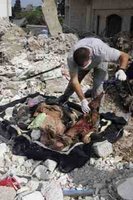
Israeli Target... what's left of a woman
.
.
.
.
.
.
.
Oil Spill Reaches Syria, August 8, 2006


Sources:

[1] Lebanon's Prime Minister Fuad Saniora, quoted in SF Chronicle
“ Civilian Toll Raises Questions: Israel, criticized for killing hundreds of Lebanese, says Hezbollah stores missiles in residences” by Anna Badkhen

[2] Internal Security Forces' directorate general, reported by the Daily Star of Lebanon
Web Link

[3] Same source as [2]
More than 100 homes and residential buildings destroyed in the areas of Tyre, Aita al-Shaab, Rmeish, Houla, Sarifa, Braachit, Shahour, Borayqeh, Shehabieh, Doueir, Aaba, Majadel, Dabaal, Jbeil, Ain Mezreb, Ghandourieh, Haret Hreik, Baalbek, Khiam, Dibbine, Marjayoun, Kfar Shuba, Bint Jbeil, Aitaroun, Tibnin, Maaroub, Kounin, Blida, Kfar Hammam, Meis al-Jabal, Jabal al-Batm, and Abbassieh.

[4]Same source as [2]
12 service stations in Bir Abed, Khiam, Ain Ibl, Moseileh, Rmeileh, Houla, Hesbe, Tyre, Kfar Kila, and Douris.

[5] Associated Press July 23, 2006, KATHY GANNON
Web Link

[6] Specific cases of injured and killed:
A member of the U.N. observer team in south Lebanon, Italian Capt. Roberto Punzo was wounded by guerrilla fire (the second observer injured). [5] July 23

Fleeing refugees, including women and children, were cut down on a road adjacent to the Lebanese-Israeli border in an airstrike as they left the village of Marwaheen. The bodies of several children, one headless, were sprawled on the ground. Police said 15 were killed in the afternoon attack and an Associated Press photographer counted 12 bodies in the two cars. [16] (July 15)

At least three civilians were killed when another Israeli airstrike hit a bridge near the Syrian border, cutting the last land link on the main road to Syria and its capital, Damascus. [16] (July 15)

Eight Canadians of Lebanese origin, all members of the same family, were killed by an Israeli strike on their village in the south where they'd come for a summer visit. [17] (July 16)

In the southern port of Tyre, an Israeli missile tore of the top of a 12-story building, killing at least nine. [17] (July 16)

A missile hit a minibus, killing 12 civilians as they were driving through the seaside town of Rmeileh, south of Beirut. [18] (July 17)

Nine members of the same family were killed when a bomb hit their house in the village of Aitaroun. [21] (July 19)

21 civilians were killed and 30 wounded in an air strike against the southern village of Srifa, 20 miles north of port of Tyre, when 10 houses were bombed. [22] (July 19)

A Lebanese photographer the magazine Al-Jaras, Layal Nejim, 23, became the first journalist to die in the fighting when an Israeli missile hit near her taxi in southern Lebanon. [5] (July 23)

An Israeli airstrike hit a United Nations post in southern Lebanon late Tuesday, killing at least two (make that 4) of the agency's observers. U.N. Secretary-General Kofi Annan said he was "deeply distressed" by the "apparently deliberate" strike. [20] (July 25)

An Israeli airstrike killed at least 56 people, including at least 34 children, in a southern Lebanese village Sunday, the Lebanese Red Cross said. It was the deadliest attack in 19 days of fighting. Lebanese security officials put the toll at 57 dead. Security officials said the toll rose dramatically after 18 people from two families were found in a single room of the building, where dozens of people had been taking refuge from the fighting. [30]

Warplanes returned to the capital midday and sent missiles into Chiah, a south Beirut neighborhood where at least 41 people were killed in a strike Monday (Aug 7). [44]

Israeli missiles slammed into the southern Lebanon village of Rachaf, about 10 miles from the Israeli border, killing at least 15 civilians, security officials said. [47]

The death toll continued to rise after the August 7 cease fire when, on August 16, rescue workers pulled 32 bodies from the rubble in the southern town of Srifa, target of some of Israel's heaviest bombardment in the 34-day conflict. [53]

[7] Associated Press, July 22, 2006. Among the civilian deaths are 8 Canadians, 2 Kuwaiti nationals, 1 Iraqi, 1 Sri Lankan, 1 Jordanian. Web Link

[8] Daily Star of Lebanon, July 19, 2006
Web Link

[9] Daily Star of Lebanon, July 18, 2006
Web Link

[10] IRIN, a UN humanitarian information unit.

[11] BBC, July 14, 2006
Web Link

[12] CNN, July 15, 2006
Web Link

[13] CNN, July 16, 2006
Web Link

[14] Associated Press, LEE KEATH July 24, 1006
Web Link

[15] CNN, July 25, 2006
Web Link

[16] Associated Press, July 15, 2006 SAM F. GHATTAS
Web Link

[17] Associated Press, July 16, 2006 Hamza Hendawi And Lee Keath Web Link

[18] New York Times, July 17, 2006 STEVEN ERLANGER and JAD MOUAWAD
Web Link

[19] ABC News (AP See Also [17]), July 17, 2006
Web Link

[20] CNN July 25, 2006
Web Link

[21] Associated Press, RAVI NESSMAN, via New York Sun, July 19, 2006
Web Link

[22] New York Times, July 19, 2006 JAD MOUAWAD and STEVEN ERLANGER
Web Link

[23] CNN July 27, 2006
Web Link

[24] Reuters, Nadim Ladki, July 27, 2006
Web Link

[25] ABC "World News Saturday," July 22.

[26] Associated Press, SAM F. GHATTAS, July 26.
Web Link

[27] BBC, "Lebanon Damage Report"
Web Link

[28] Guardian Unlimited, damage inventory, Brian Whitaker July 21, 2006
Web Link

[29] CNN, July 29, 2006
Web Link

[30] Associated Press, KATHY GANNON, July 30, 2006
Web Link

[31] Associated Press, KATHY GANNON, July 30, 2006
Web Link

[32] Reuters, Alaa Shahine, July 31, 2006
Web Link

[33] BBC, Richard Black, July 21, 2006
Web Link

[34] BBC, August 2, 2006
Web Link

[35] CNN, August 1, 2006
Web Link

[36] Reuters, Lin Noueihed, August 4, 2006
Web LINK

[37] Interview on DemocracyNow with Amy Goodman July 31, 2006. "Just a few days ago we documented an attack on the village of Blida, in which the Israelis used cluster munitions." Peter Bouckaert of Human Rights Watch in Beirut.
Web LINK

[38] Associated Press, SAM F. GHATTAS, August 7, 2006
Web LINK

[39] Wikipedia Casualties of 2006 Israel-Lebanon Conflict, which sources BBC, ITAR-TASS.
Web LINK

[40] Reuters, August 3, 2006.
Web LINK

[41] Reuters, August 4, 2006.
Web LINK

[42] Reuters, August 6, 2006.
Web LINK

[43] Flashpoints, WPFW, Dennis Burnstein interview of Bilal El-Amine, Aug 8.
Web LINK

[44] Associated Press, CHRISTOPHER TORCHIA, August 11, 2006
Web LINK

[45] CNN, August 4, 2006
Web LINK

[46] Flashpoints, WPFW, Dennis Burnstein interview of Bilal El-Amine, Aug 9.
Web LINK

[47] Associated Press, LAUREN FRAYER and SAM F. GHATTAS, August 12, 2006.
Web LINK

[48] Lebanese Government via map made available from www.lebanonmaps.org.

[49] Associated Press, Zeina Karam, August 14, 2006
Web LINK

[50] Associated Press, August 12, 2006
Web LINK

[51] Dahr Jamail, indpendent journalist.
Photo Gallery

[52] Reuters, July 18, 2006
Web LINK

[53] Associated Press, SAM F. GHATTAS, July 17, 2006. Web LINK

[54] Associated Press, Seven R. Hurst, August 15, 2006. Web LINK

[55] Reuters, August 18, 2006. Web LINK

[56] Associated Press, SAM F. GHATTAS, August 20, 2006. Web LINK

[57] New York Times, John Kifner, "Human Rights Group Accuses Israel of War Crimes," August 24, 2006.Web LINK

[58] DemocracyNow!, Ana Nogueira, August 23, 2006. web LINK

[60] Associated Press, August 2, 2006. Web LINK

[61] AFP, August 25, 2006. Web LINK

[62] DemocracyNow!, August 30, 2006. web LINK

[63] DemocracyNow!, August 25, 2006. Web LINK

[64] DemocracyNow!, September 1, 2006. Web LINK

[65] DemocracyNow!, Amnesty International interview, August 23, 2006. Web LINK

[66] United States Government Situation Report, Lebanon Humanitarian Emergency, USAID citing various source, Index of reports by date.
Web LINK to Index of All Situation Reports

[67] Reuters, "UN says Israel laid anti-personnel mines in Lebanon" November 28, 2006 Web LINK

[68] DemocracyNow! Headlines, "Shortage of Funding Halts Mine Sweeping in Lebanon"
August, 25, 2008.